
Dr Jen Hipwell
Head of Veterinary Services
Dr Jen Hipwell is a veterinary surgeon who worked in small animal practice. A good part of her week was new puppies and kittens coming in for their first appointments. She is now Head of Veterinary Services at Animal Friends Insurance. That combination is a rare one. She reads the clinical picture and the claims data side by side, giving her insight into a wider range of challenges and problems that some pups encounter during their early years.

About
Training and early career
Jen studied Veterinary Science at the University of Liverpool, Faculty of Veterinary Science. Alongside it she took a bachelor's in veterinary pathology at the Royal Veterinary College, and finished it with first class honours. She went on to study for a PhD in veterinary immunology and epidemiology, then into small animal practice. She describes those first puppy and kitten appointments as the start of a lifetime of veterinary care, and worth getting right. A good early experience shapes how an owner and dog feel about the practice for years afterwards.
After leaving practice she moved to a large pharmaceutical company, giving expert input on animal medicine, drug use and co-morbidity. She now leads veterinary services at Animal Friends Insurance. She has since taken the Chartered Insurance Institute's certificate in general insurance, and a postgraduate certificate in veterinary business management at Liverpool.
What claims data shows
The insurance side gives her something a consulting room cannot. Claims data shows which risks turn into real cost, and how often, across far more first years than any single practice will see. It also shows her the processes and restrictions that sit behind a policy, which most owners never get to look at.
Why she writes
Her reason for writing is a straightforward one. Most of what a new owner finds online is too clinical, too commercial, or written for somebody who already knows the basics. What they actually need is clarity at the moment they need it, from a source they can trust.
Ask her about training and she will tell you about her rescue terrier. The two of them went through six rounds of puppy classes while Jen was still in practice. Other owners started asking whether she had been there the term before. The terrier was not badly behaved. She simply did what she wanted, and she would not sit unless somebody wafted a slice of ham past her face. They never passed. Jen's view is that somebody has to come last, and it set a low bar for everyone else to beat.
For HowPets
For HowPets she covers the puppy's first year: the vaccination course, the first vet visit, microchipping, and what the first night actually looks like. She is honest about that last one. A puppy that has just left its litter is likely to be unsettled and to cry, and the first few nights are broken ones. That is normal, and she would rather owners heard it in advance.
Credentials and experience
- Qualifications
- BVSc, University of Liverpool · PhD, veterinary immunology and epidemiology · Bachelor’s in veterinary pathology, Royal Veterinary College, first class honours · MRCVS, registered with the Royal College of Veterinary Surgeons (reg. 6456667)
- Further study
- PgCert in Veterinary Business Management, University of Liverpool · Cert CII in General Insurance · PL4 Introduction to Pet Insurance, Chartered Insurance Institute
- Current role
- Head of Veterinary Services, Animal Friends Insurance
- Professional memberships
- Chartered Insurance Institute (CII) · British Veterinary Association (BVA)
- Areas of expertise
- Veterinary medicine · Pet insurance · Veterinary immunology and epidemiology · Animal medicine and drug use
- Previous experience
- Small animal practice · Expert input on animal medicine, drug use and co-morbidity at a large pharmaceutical company
Articles reviewed by Jen
 Read more
Safety & protection
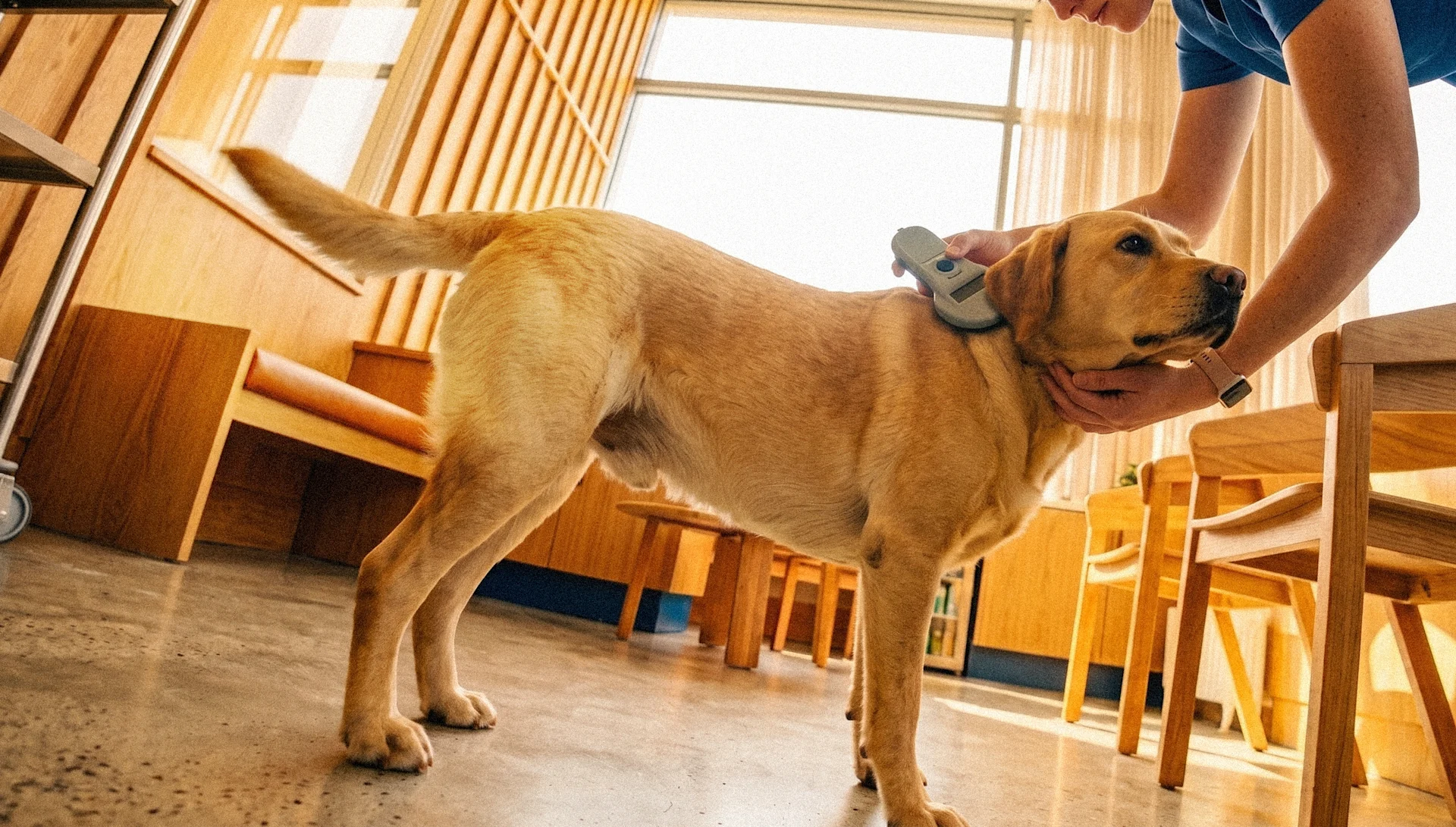
Microchipping Your Puppy or Kitten: The UK Law and How It Works
Microchipping is a legal requirement for all dogs in the UK by eight weeks old, and for cats in England by twenty weeks, including indoor cats. The chip itself is quick to fit and about the size of a grain of rice. The part that actually reunites you with a lost pet is not the chip, though. It is the registration behind it, and only if your details on it are up to date. A chip registered to an old address or a dead phone number will not get them home.
 Read more
New pet & life changes
How to Look After a Puppy: A Complete First-Year Guide
Register with a vet before your puppy arrives. Expect the first night to be a broken one. The vaccination course runs from around eight weeks, with a second dose at about twelve. Your vet will tell you when immunity has taken hold and walks can start. Toilet training lands at sixteen to twenty weeks for most puppies. The rest of the first year is routine, patience and letting them see the world at their own pace.