
Updated
In short
Before your kitten arrives you need a top-opening carrier, two litter trays, shallow food and water bowls, the same food the breeder is using, and a bed or box to hide in. Then kitten-proof the room they will live in, which matters more than anything on the shopping list.
Authored by
 Dr Alex Crow
Veterinary Surgeon
Table of contents
Most of what goes wrong in a kitten's first week is preventable with an hour of preparation. The buying is the easy part. The part people skip is walking round the room at kitten height and working out what a very small, very determined animal could get into.
Essential kit before your kitten arrives
A sturdy carrier that opens from the top. You need one to get them home, and you will need it for every vet trip afterwards. Top-opening is much easier with a kitten, because you can lift them out rather than tipping them out.
Two litter trays. The rule is one more tray than the number of cats, so a single kitten needs two. Two cats need three, and four would be better still. More choice means fewer accidents.
Litter: start with whatever they are already using. A different texture underfoot can put a kitten off the tray altogether, so buy the same litter the breeder or rescue centre used. Experiment later, once they are settled in. Some cats prefer clay, some silica crystals, some paper.
Shallow food and water bowls. This one gets missed constantly. If a bowl is deep and your cat has to put their head right into it, their whiskers press against the sides, and many cats seem to find that uncomfortable. Shallow dishes avoid it.
When you're ready to change from the breeder's food, our best kitten food guide covers what's worth paying for.
A bed or a box to hide in. A covered bed or a cardboard box is enough. Somewhere to hide is what makes a new room usable for a nervous kitten.
What to avoid: a gravity feeder, or simply topping up the bowl. Leaving biscuits available all day is how cats become obese, and obesity in cats leads to diabetes later in life. Measure what your kitten needs and feed that. A timed feeder that releases a weighed portion is a different thing, and it can help.
Slow feeder bowls do work for cats if you want one. The same caveat applies, so not so deep that they press on the whiskers.
How to kitten-proof your home
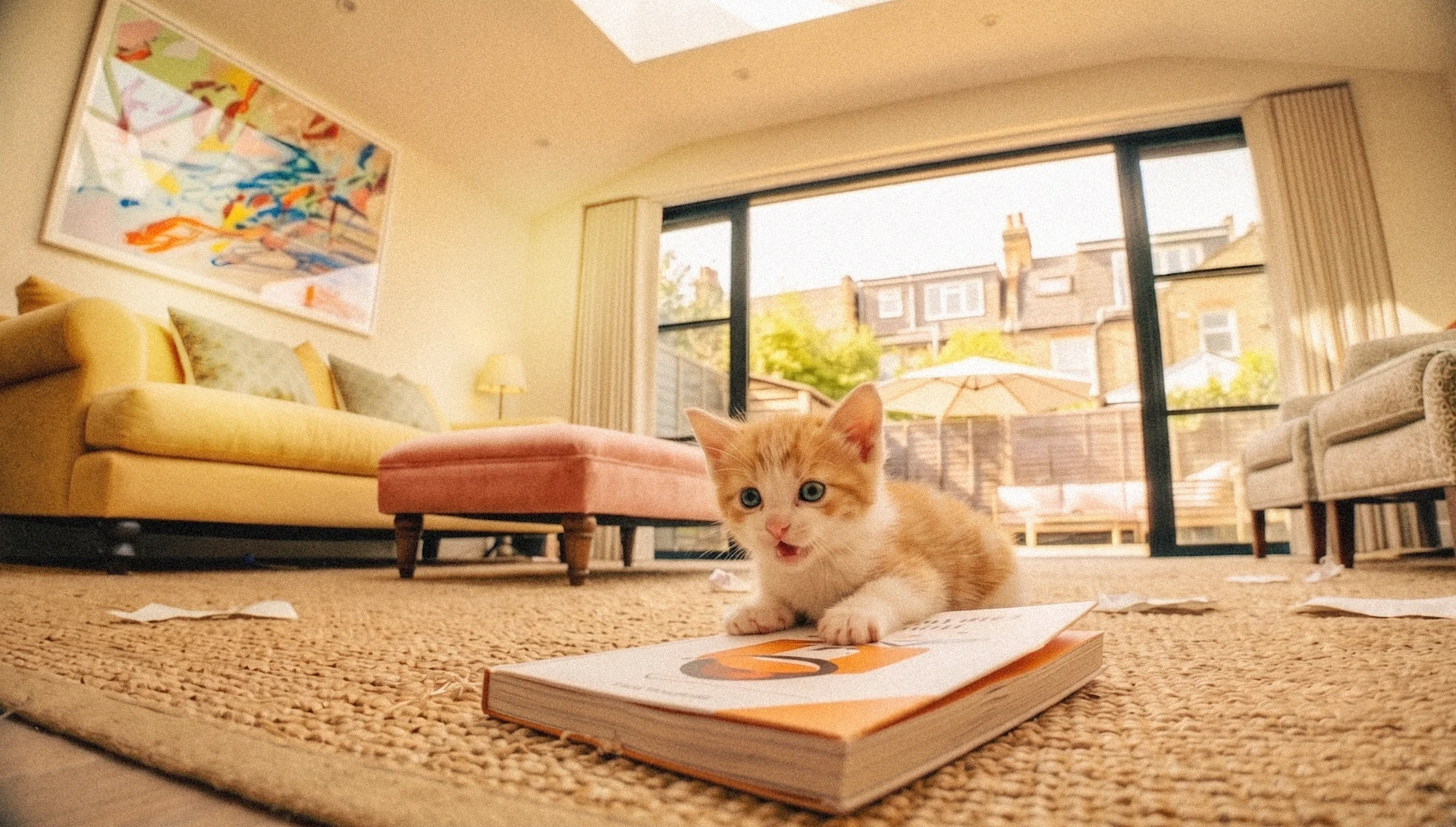
Think about the house from your kitten's height. They live at floor level, so get down there. A commando crawl round the room tells you more than standing up and looking.
Check every gap, then check the ones you dismissed. Kittens contort themselves in ways that surprise people, and the spaces they choose are the ones you cannot easily get them out of again, behind and under the fridge, inside cabinets, under the kickboards. A cat in the fabric of your house is a very difficult problem to solve.
“Anywhere that you can fit like your hand or a fist into, a kitten will generally be able to get into as well.”
Dr Alex Crow / Veterinary Surgeon
Audit your houseplants, and do it before they arrive. This is the danger most owners have never heard of. Lilies are highly toxic to cats and can be fatal, and they are extremely common in bouquets and living rooms. A cat does not have to eat one. Brushing against the pollen and then grooming it off is enough to cause fatal kidney damage.
The deadly kidney effect is specific to cats, which is why many dog owners have never heard of the risk. True lilies can still upset a dog's stomach. Other house plants are dangerous to both, so if you have a dog as well, check the list for them separately.
Go through every plant in the house, look up whether it is toxic to cats, and get rid of the ones that are. If you are not sure about something, look it up before your kitten arrives rather than after.
Washing machines and tumble dryers. Keep the doors shut. There are horror stories of cats climbing in and the machine being switched on, and cats do not survive it.
Blind cords. Cats get tangled in them and can strangle themselves. Tie them up out of reach, or fit one of the cord tidies that come with most blinds.
String, wool and ribbon. The classic image of a kitten with a ball of wool is also a classic emergency. Swallowed string causes serious internal injuries, and a kitten has no idea of the risk. Put it away.
Chemicals, cleaning products and antifreeze. Locked away, as you would with a small child.
Human medication, and paracetamol especially. Paracetamol is toxic to cats and will kill one, which is not true in the same way for dogs. Make sure none is left within reach.
Windows and balconies. Shut, or securely screened.
Bedding and duvets. Kittens can get stuck in heavy bedding and suffocate. An adult cat can force its way out; a kitten often cannot. Worth knowing if your kitten will be sleeping anywhere near a duvet.

Get our latest guides, stories and offers by email
Setting up the litter tray and a safe space
Put the tray in a quiet corner, out of the way and out of sight. Cats want privacy, and a private tray is a tray they will use.
Keep the tray, the food and the water all apart. Cats instinctively avoid drinking water near their food, because in the wild water beside a carcass could be contaminated. Separate all three as far as you reasonably can, out of sight and out of smell of each other. Lining them up along one wall is the single most common setup error.
Set up one room, not the whole house. Keep your kitten to one room for the first few days. Letting them loose in the whole house is overwhelming, and they will find hiding places you cannot reach.
Give them somewhere obvious to hide in that room, and let them use it. Hiding is how a cat makes a strange place manageable, not a sign that something is wrong.
Leave the carrier out with the door open. Most owners produce the carrier twice a year, so the cat learns it means the vet and comes to dread it. Left down as a bed from day one, it becomes somewhere they choose to sleep, and vet trips are easier for the rest of their life.
Then expand slowly. Once they are relaxed in that room, open up another, then another.
Your first-week shopping list
Beyond the kit above, the things worth having in before day one:
The same food the breeder or rescue centre is using. Ask them what it is and buy some, even if you plan to change later.
Shallow bowls, one for food and one for water, kept apart.
A scoop and a bin for the litter tray, plus an enzymatic cleaner for accidents. Never use bleach or anything ammonia-based, because to a cat those smell like urine, which invites a repeat in the same spot.
Toys that let them chase and climb, and something to scratch. Cats need stimulation in the house, and making them work for food occasionally is good for them.
A bed, though many kittens will pick their own spot regardless.
Pet insurance: protects you from large bills if your pet gets sick or hurt. Most standard policies do not cover health issues your pet already has before you sign up.
On changing food, take ten days. Swapping a kitten straight onto a new brand on the day they arrive is a common cause of stomach upsets. If you want to change, mix half old and half new and transition across about ten days.
Booking the first vet visit
Register with a practice before your kitten arrives, not when something is wrong.
Look for ISFM Cat Friendly Clinic accreditation. This is worth actively seeking out. Accredited practices meet standards specifically for cats, which usually means a separate waiting area, sometimes separate consulting rooms and separate wards, so your cat is not sitting in a box next to a large dog. A lot of health problems in cats are linked to stress, so this makes a real difference rather than being a badge. Practices that hold it tend to say so on their website.
Book a health check in the first week. A general once-over from a vet in the first few days confirms your kitten is well and gives you someone to ring afterwards.
Check the microchip is done and registered to you. In England, your cat must be microchipped and registered by the time they are 20 weeks old, including cats that never go outside, and you can be fined up to £500 if they are not. In Scotland, Wales and Northern Ireland it is not currently a legal requirement, though it is still worth doing.
The chip is about the size of a grain of rice, sits under the skin, and carries a unique number held on an approved database. That number is only useful if the details attached to it are yours and current. Check the registration is in your name rather than the breeder's, and update it whenever you move house or change your phone number. Failing to register on an approved database carries the same £500 fine.
Confirm where they are up to with vaccinations, and book whatever is outstanding. Ask for the worming and vaccination history in writing from the breeder or rescue centre, rather than relying on what you were told on the day.
Ask the practice where its out-of-hours cover actually is. Some send emergencies to a provider three quarters of an hour away, and the moment to discover that is not when you need it.
Budget for the first year. A kitten's first year typically costs between £1,670 and £1,790 all in. Roughly:
First-year cost | Typical range |
|---|---|
One-off kit and setup, including the microchip | £232 |
Neutering | £80 to £200, depending on whether it is a castration or a spay |
Running costs for the year: food, litter, insurance, routine healthcare, the annual check and pet sitting | £1,358 |
Total, first year | £1,670 to £1,790 |
Where these come from. The kit and running costs are Battersea Dogs and Cats Home's figures, published 6 July 2026. The neutering range is Dr Alex Crow's. The running costs include pet sitting, which not every owner pays for, so treat the total as the higher end of realistic rather than a floor. Vet prices vary a lot between practices and across the country, so ask your own practice what they charge.
Key takeaways
Buy a top-opening carrier, two litter trays, shallow bowls, and something to hide in.
Avoid gravity feeders and topping up the bowl. Free access to food is how cats become obese and diabetic. A timed feeder giving a weighed portion is fine.
Kitten-proof at floor level. If your hand fits in a gap, so does a kitten.
Lilies are the most missed danger in the house and can be fatal to cats. Audit every plant.
Paracetamol will kill a cat. Keep all human medication out of reach.
Keep the litter tray, food and water apart from each other, all in one quiet room to start.
Leave the carrier out as a bed so it never only means the vet.
Get the same food the breeder used, and take ten days over any change.
Register with a vet before you need one, and look for ISFM Cat Friendly Clinic accreditation.
Budget £1,670 to £1,790 for a kitten's first year, including neutering, food and kit.
Frequently asked questions
What do I need to buy before getting a kitten? A top-opening carrier, two litter trays and litter, shallow food and water bowls, a bed or box to hide in, toys, something to scratch, and the same food the breeder is using.
How many litter trays does one kitten need? Two. The rule is one more tray than the number of cats.
Are lilies dangerous to dogs too? Not in the same way. The fatal kidney damage from true lilies is specific to cats, though they can still upset a dog's stomach. Peace lily and lily of the valley are not true lilies, and both are toxic to cats as well as dogs, so neither belongs in a house with a kitten in it.
What is the most dangerous thing in my house for a kitten? Lilies, most likely, because so few owners know about them. They are highly toxic to cats and can be fatal, and contact with the pollen is enough. Paracetamol is the other big one.
How do I kitten-proof a room? Get down to floor level and look. Block any gap you could fit a hand into, shut the washing machine and tumble dryer, tie up blind cords, put string and wool away, and lock away chemicals and medication.
When should my kitten first see a vet? Within the first week, for a general health check. Register with the practice before your kitten arrives.
Is microchipping a kitten a legal requirement? In England, yes. Your cat must be microchipped and registered by 20 weeks old, with a fine of up to £500 if they are not. It is not currently required in Scotland, Wales or Northern Ireland, but it is still worth doing. Check the registration is in your name and keep your details current.
How much does a kitten cost in the first year? Typically £1,670 to £1,790 all in, covering one-off kit, the microchip, neutering, and a year of food, litter, insurance and routine healthcare. Vet prices vary by practice and region.
The checklist gets you to collection day. For everything after it, read how to look after a kitten in its first year or browse our New pet & life changes guides.
Sources: Battersea Dogs and Cats Home, The cost of owning a cat, updated 6 July 2026, for the kit and running costs. Neutering figures are typical ranges from a practising UK vet, Dr Alex Crow, correct as at September 2026. The lily and toxic plant information was checked against PDSA and Dogs Trust guidance on 2 September 2026. The microchipping law, including the England-only requirement, the twenty-week deadline and the £500 fine, was verified against gov.uk on the same date.
Microchip registration
More on microchippingDr Alex Crow
Veterinary Surgeon
Dr Alex Crow BVetMed MRCVS has been a small animal vet for seven years, with a particular interest in nutrition and in dermatology and allergies. He is Chief Veterinary Officer at The Net Vet and Official Vet for Pooch & Mutt, and reaches around 200,000 followers with pet education content.