Updated
In short
The best kitten food in the UK is a complete, kitten-specific food from a manufacturer you have heard of. Very cheap food really is worse, so it is worth avoiding the bottom of the market. Above that, a more expensive bag rarely gives your kitten anything the mid-priced one does not.
Authored by
 Dr Alex Crow
Veterinary Surgeon
Table of contents
The question I get asked most about kitten food is which brand to buy. It is the wrong question, and the honest answer saves people a lot of money. What matters is what is in the food, whether it is made for a growing kitten, and how much of it you put in the bowl each day.
This guide covers what to look for on the label and how wet and dry compare. It then covers how much to feed at each age, and when to move your kitten onto adult food. If you have a puppy too, our puppy food guide covers the same ground for dogs.
What to look for in a kitten food
"Complete" is the word that matters. It is a legal term, not a marketing one. A food labelled complete meets the FEDIAF nutritional standards on its own. That means every macronutrient and micronutrient is there in the right quantity, including fat, protein, some carbohydrate, and all the vitamins and minerals. The balance is set for what a growing kitten needs. If a food is labelled complete and labelled for kittens, the nutrition is covered.
It has to say kitten. Kittens are growing and developing, so their calorie requirements are much higher than an adult cat's. Kitten food is denser in energy, with more protein and fat, because it is building bone and organ tissue. Don't buy a generic cat food for a kitten. There is a good chance it will not carry enough calories for them to grow properly.
Buy from a manufacturer whose name you recognise, or at least one that sells through a pet shop. Be wary of food sold through places like Facebook Marketplace, where you have no way of knowing how it has been stored or whether it is what it claims to be.
Cats must have meat. Cats are obligate carnivores, which means their bodies cannot make some essential nutrients themselves and have to get them from meat. It is not optional for them the way it is for a dog. Dogs are far more flexible and there are some decent vegan dog diets available. A vegan diet will kill a cat. Most cat food is meat-based for that reason, and I would personally avoid the vegan cat products that do exist.
Ignore the buzzwords. Owners get drawn in by words on the front of the packet. I see this most with hypoallergenic claims in the dog world, where a large proportion of foods carry the word and many are not hypoallergenic in any meaningful sense. The word on the front tells you about the marketing. The word "complete" and the life stage tell you about the food.
Breed-specific formulas matter far less for cats than for dogs. Most adult cats land somewhere between three and six kilos. Dogs run from three to sixty. A large-breed formula matters for a Great Dane, because Chihuahua food would not carry the calories. For cats, any decent adult cat food suits most adult cats, and any decent kitten food suits most kittens.
Is expensive kitten food worth it?
Up to a point, yes. The cheapest kitten foods really are lower quality, so spending a bit more does buy you a better food.
Past that point, the link breaks. Once a food is complete and made for kittens, it already contains everything your kitten needs to grow. Spending £50 a week instead of £20 does not add anything on top of that, because there is nothing left to add. What you are paying for at the top of the market is usually the marketing.
So buy above the very cheapest, check the label says complete and says kitten, and stop there. If you would rather spend more, that is your call. I would not expect to see the difference in the cat.

Get our latest guides, stories and offers by email
Choosing between dry and wet kitten food
There are pros and cons to both, and as long as both are complete and from a good manufacturer, either is absolutely fine. A mix usually works best.
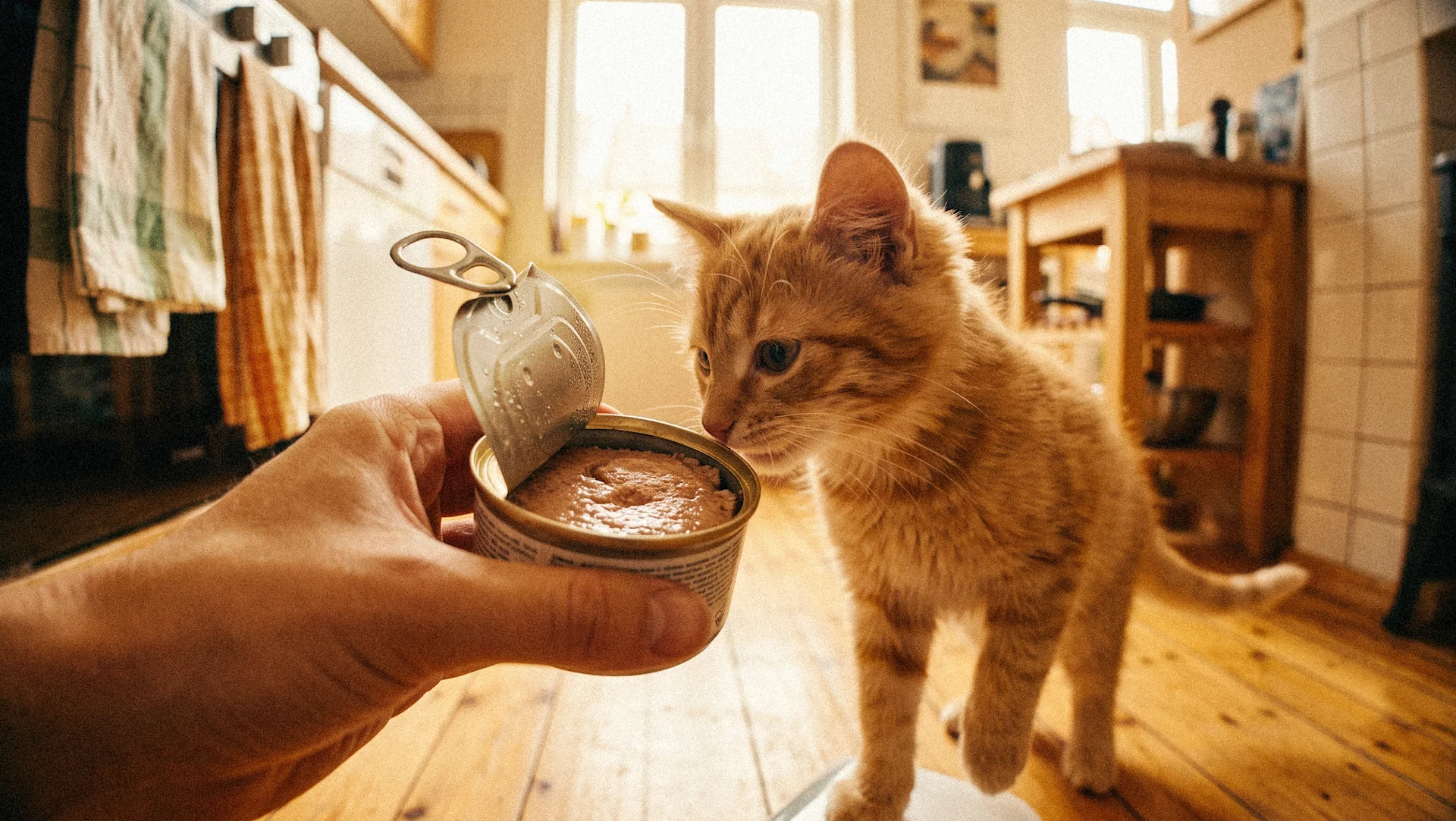
What wet food does well. Wet food is roughly 75 to 80% water, where dry food holds far less. That matters more than it sounds, because some cats are poor drinkers. A cat who will not drink much from a bowl, especially one placed near their food or their litter tray, gets useful water from wet food.
What dry food does well. Dry food can be better for teeth, because a cat has to crunch through it. That is less of a factor in kittens, who are going to lose their kitten teeth anyway, but the variety helps. It also works out cheaper per calorie and is more convenient, and it does not spoil sitting in the bowl. It works well in puzzle feeders too, which gives a kitten something to think about at mealtimes.
The catch with dry food is density. It is much more energy-dense, so a cat needs a lot less of it than wet food. Be aware of that when you fill the bowl, because it is an easy way to overfeed a cat without realising.
A mix is what I would do. Half and half, or whatever split suits you and your kitten. What actually matters is the total. Hit their calorie requirement for the day without going over it.
“As long as you're getting them a full, complete, balanced diet, from a specific kitten food that's got everything they need, spending that extra money is probably a waste.”
Dr Alex Crow / Veterinary Surgeon
Kitten feeding amounts by age
Kittens have high energy needs and small stomachs, so they need feeding little and often at the start. The number of meals comes down as they grow.
From eight to twelve weeks: four small meals a day, which is when most kittens come home. Their calorie needs are high and their stomachs are tiny, so several small meals is the only way to get enough in.
From around three to six months: three meals a day.
From around six months: two meals a day.
Cats are natural nibblers, so several smaller measured meals suit them well. Putting part of the day's ration in a puzzle feeder is arguably more feline than two bowls.
Treat those as a starting point rather than a rule. The right amount depends on breed, activity level and the individual cat. Some kittens graze and some prefer set meals, and you may need to adjust for that.
Feed the kitten in front of you, not the packet. Pack guidelines are written for an average kitten of average weight and take no account of individual metabolism or activity. Weigh your kitten once a week on digital kitchen scales and look for steady, consistent gain, roughly 100 grams a week through early kittenhood. Check their body condition as well. You want to be able to feel their ribs, but not see them. Make any change in small steps, no more than about 10% at a time, then watch for a week or two before adjusting again.
A smaller littermate usually needs the same food more often, not a bigger bowl. Give them smaller, more frequent meals. A kitten who is genuinely failing to thrive is a conversation with your vet rather than a feeding tweak.
Avoid free feeding. What matters is that a cat gets the amount they need across the day. Measuring out the day's food and leaving it down is fine, because they cannot eat more than what is there. Refilling the bowl every time it empties is the problem. Cats are not good at regulating their own appetite, and if food is there, they will eat it. That is how cats end up overweight and picking up the health problems that come with it.
If you have more than one kitten, feed them separately. Staggering meals, or taking one out at a time, stops food competition between littermates and lets you see exactly how much each kitten is eating.
When to switch to adult food
Around ten to twelve months for most cats. Life-stage foods are staged for a reason, and I would stick to them. Make the change gradually over a week or so, mixing a little more adult food into each meal, because a hard swap upsets stomachs.
A neutering or vaccination appointment is a good moment to ask your vet to body-condition score your kitten and help you time the switch.
Leaving a cat on kitten food into adulthood means giving them too many calories. It will not poison them, but done long-term it leads to obesity, and obesity is linked to diabetes and a string of other health problems. Kitten food is built to fuel growth. Once the growing is done, that extra energy has nowhere to go.
One more adjustment worth knowing about. Neutering drops a cat's energy needs by roughly 20 to 30%, because removing those hormones slows their metabolism. Appetite often increases at the same time, and that combination is exactly how neutered cats become overweight cats. Keep feeding measured portions rather than topping the bowl up, and weigh your cat monthly after the operation so you can adjust before the weight goes on.
Bowls, trays and the rest of the starter kit are on our new kitten checklist.
Key takeaways
The best kitten food is a complete, kitten-specific food from a manufacturer you recognise. That covers most of the decision.
The cheapest kitten foods really are worse, so spend above the bottom of the market. Above that point, a more expensive bag rarely adds anything.
Never feed a cat a vegan diet. Cats are obligate carnivores and must have meat.
Wet food helps cats who drink poorly, and dry food can help teeth, costs less per calorie and works well in puzzle feeders. A mix works well.
Feed four small meals a day from eight to twelve weeks, three from around three to six months, and two from around six months.
Weigh your kitten weekly and feed the kitten in front of you rather than the pack guideline, changing amounts by no more than 10% at a time.
Avoid free feeding. Measure the day's food out rather than refilling the bowl.
Switch to adult food at around ten to twelve months, over a week or so rather than in one go.
Neutering cuts a cat's energy needs by roughly 20 to 30% while appetite often rises, so measure portions and weigh monthly afterwards.
Frequently asked questions
What should I look for on a kitten food label? The word "complete", and the word "kitten". Complete is a legal term meaning the food meets the FEDIAF nutritional standards on its own. Kitten means the calorie density suits a growing animal.
Is expensive kitten food better? Not above a certain point. Cheap, low-quality food is worse, but once a food is complete and kitten-specific, paying more rarely adds anything your kitten needs.
Is wet or dry food better for kittens? Both are fine if they are complete and from a good manufacturer. Wet food helps with hydration, and dry food can help teeth, costs less per calorie and is easy to use in puzzle feeders. A mix suits most kittens.
How many times a day should I feed a kitten? Four small meals a day from eight to twelve weeks, dropping to three from around three to six months and two from around six months. Cats are natural nibblers, so smaller measured meals suit them.
When should a kitten move onto adult cat food? At around ten to twelve months for most cats, changing over gradually across a week or so. Staying on kitten food past that point means too many calories, which leads to obesity over time.
Can kittens eat adult cat food? Not as their regular diet. Adult food is unlikely to carry enough calories for a growing kitten.
Can cats be vegan? No. A vegan diet will kill a cat. Cats have to get certain essential nutrients from meat, which is one of the real differences between cats and dogs. Vegan cat foods are sold in the UK, and I would avoid them.
For more on feeding, browse our Food & diet guides, or read our complete guide to looking after a kitten for the rest of the first year.
Sources: "Complete" is defined against the FEDIAF nutritional guidelines.
Dr Alex Crow
Veterinary Surgeon
Dr Alex Crow BVetMed MRCVS has been a small animal vet for seven years, with a particular interest in nutrition and in dermatology and allergies. He is Chief Veterinary Officer at The Net Vet and Official Vet for Pooch & Mutt, and reaches around 200,000 followers with pet education content.