
Updated
In short
Most kittens are ready to go outside about two weeks after their second vaccination, which usually lands at around fourteen weeks old. In practice, the date that matters more is neutering, and that is normally five to six months. Letting an unneutered kitten out is where the trouble starts.
Authored by
 Louise Rees
Registered Veterinary Nurse
Table of contents
Before the first trip, your kitten should be vaccinated, neutered and microchipped, with the chip registered to you.
Not there yet? Bringing a kitten home covers the first 24 hours, long before the garden comes into it.
When it is safe: vaccinations and neutering
The vaccination timeline. The first jab is usually at eight or nine weeks, often before your kitten comes home. The second follows three to four weeks later, at around twelve weeks. Then allow two weeks for that second vaccination to take effect, which puts you at roughly fourteen weeks.
But neutering is the real gate, and it comes later. Kittens can be neutered from about four months, though most vets prefer five or six months, when they are a bit more developed. At four months they are still very small.
Wait for it. An unneutered kitten outside is the situation nobody wants:
Unneutered males roam, and they roam a long way to find females. Your cat disappears for a fortnight and comes back having fathered half the neighbourhood.
Unneutered females get pursued, sometimes by several toms at once, and can come home repeatedly frightened and bitten. A four-month-old female is far too young to be dealing with that.
The UK already has a serious stray and unwanted cat problem. A litter you did not plan is a direct contribution to it.
And microchipping. In England your cat must be microchipped and registered by twenty weeks, indoor cats included, with a fine of up to £500. It is not currently required in Scotland, Wales or Northern Ireland, but it is the thing that gets a lost cat home, so I would recommend it wherever you live.
Read our full guide to microchipping your puppy or kitten
Preparing your kitten for the outdoors
Confirm the microchip is registered to you, not the breeder or rescue centre. A chip registered to somebody else will reunite your cat with somebody else.
Think carefully about a collar. Some cats tolerate one and some scratch at it constantly, in which case it is not worth persisting. Collars do occasionally catch on things, which is rare but does happen, and many owners remove them when the cat is home alone. The microchip is doing the real work here.
Teach a comeback signal indoors first. Most cats will learn to come to a call or a whistle, particularly if it has always meant food, and it is much easier taught inside than shouted across a garden in the dark.
Get the indoors right too. A cat with climbing space, a decent scratching post and things to chase indoors is not relying on the outside world for all of its stimulation, which makes the transition calmer.

Get our latest guides, stories and offers by email
Supervised first trips outside
Keep the first outing small and stay put. The point of the first few trips is not exploring, it is letting your kitten take in the noise and the smells while you are visibly there. Expect them to keep glancing back to check on you.
Go out an hour or so before their meal. Hunger is your best insurance. A kitten who is due to be fed shortly does not go far and comes back on their own.
“If you've got a little garden or a little area, even a puppy pen or something like that, I'd put them in there just so they can smell and see what's going on and you're around.”
Louise Rees / Registered Veterinary Nurse
Do that a few times before you leave them to it. Two or three short, supervised outings tell you a lot about which sort of cat you have. Some stay glued to you. Others are over the fence before you have finished the sentence.
If they do disappear, they usually come back. Cats return to where they are fed, and a kitten who has wandered further than intended will normally be back within a day.
One thing to sort with the neighbours. Cats go where the food is. If somebody nearby starts feeding your cat, your cat will start living partly at their house. It is worth a friendly word early rather than a puzzled one later.
Fitting a cat flap
Any age technically, but wait until they are neutered. A cat flap is a door your cat controls, and fitting one before neutering hands an unneutered kitten unsupervised access to the outside at exactly the age they are most likely to get into trouble.
Get a microchip cat flap. It reads your own cat's chip and lets only them in. Without one you will find other people's cats coming through and eating your cat's food, which is more common than owners expect.
Lockable is worth having. Plenty of owners let their cat out in the morning and keep them in overnight, and a flap you can lock makes that simple.
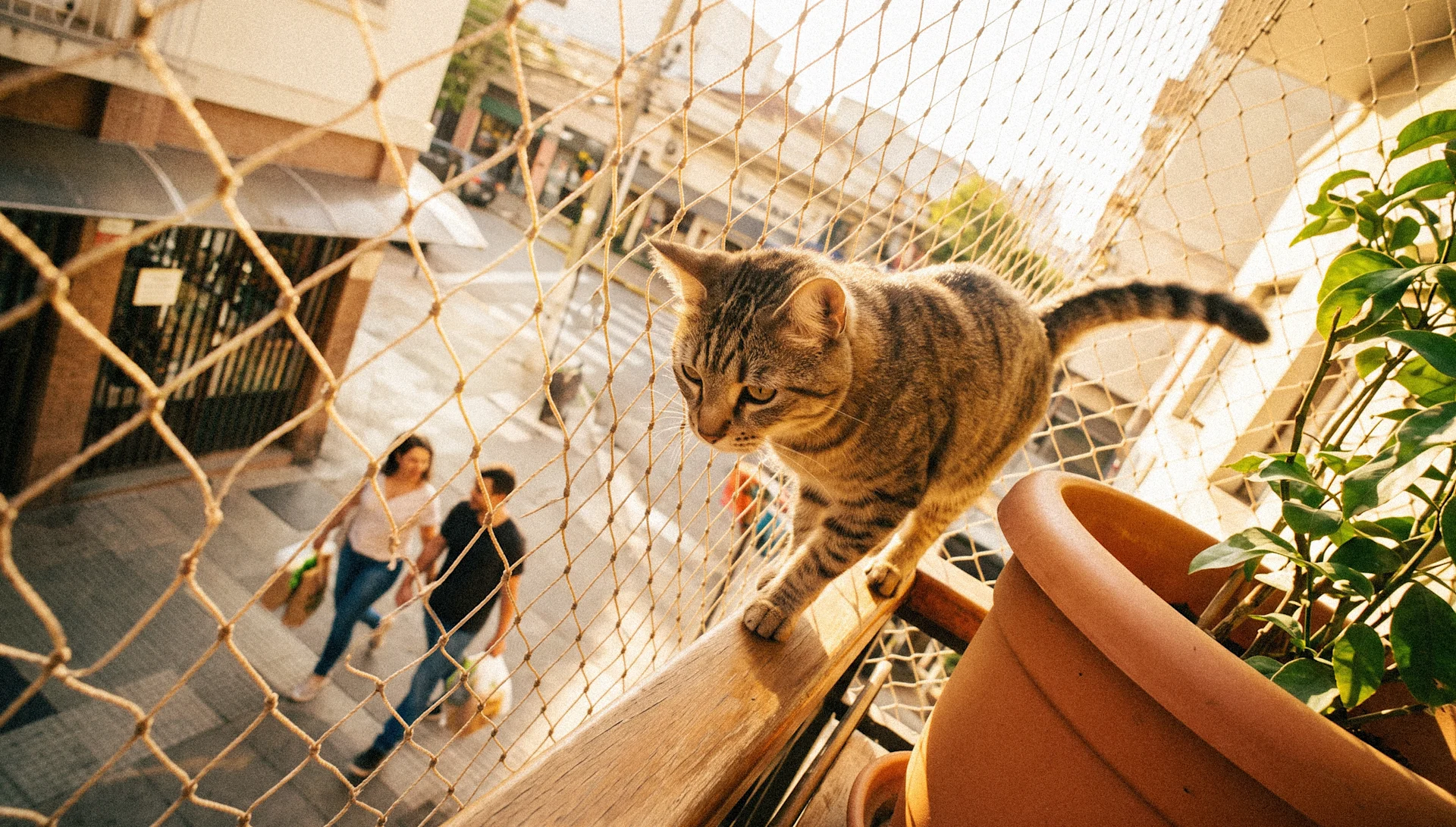
If you would rather they did not roam at all, there are middle options. A catio is an enclosed outdoor pen, often built onto the back of the house or leading straight off the cat flap, so your cat gets fresh air, height and things to climb without being able to leave the garden. Cat-proof fencing with inward-facing tops does a similar job across a whole garden. Both give a cat outdoor space without the road. They work well for owners who have lost a cat before, or who live somewhere they would rather not risk.
Keeping an outdoor kitten safe
A night curfew is the single most effective thing you can do. Night is when most cats are hit by cars, because drivers cannot see them. In with the flap locked at night, out in the morning.
Very friendly cats need more watching, not less. A sociable cat will follow someone home, sit in a road without registering it as a road, and generally behave as though nothing out there means them any harm. A former street cat knows what traffic is; a kitten raised indoors does not.
If you have a pedigree, be aware of theft. A striking cat wandering about is a target in a way a moggy is not.
Accept that there will be territory disputes. Other cats live nearby and they will sort out the boundaries between them. That is normal cat life rather than a problem to solve.
Neutering and microchipping are what reduce the risks you can actually control. You cannot make the road safe. You can make sure your cat is not roaming for miles, is not fighting over mates, and can be identified if the worst happens.
Key takeaways
Kittens can usually go out two weeks after their second vaccination, at roughly fourteen weeks.
Neutering matters more than vaccination timing, and that is normally five to six months.
Unneutered males roam a long way. Unneutered females get pursued, sometimes at four months old.
In England, cats must be microchipped and registered by twenty weeks, indoor cats included.
Check the chip is registered to you before the first trip out.
Go out an hour before a meal. A hungry kitten comes back.
Start in a small enclosed area, with you there, a few times before letting them roam.
Fit a microchip cat flap so other cats cannot come in, and a lockable one for a night curfew.
Bring them in at night. Most cats are hit by cars after dark.
Frequently asked questions
When can a kitten go outside after vaccinations? About two weeks after the second vaccination, which is usually around fourteen weeks old. Most vets would also wait until the kitten is neutered.
Can I let my kitten out before they are neutered? It is not a good idea. Unneutered males roam long distances and unneutered females are pursued by them, sometimes from four months old. Neutering usually happens at five to six months.
How do I get my kitten to come back? Let them out hungry, an hour or so before a meal. Cats come back to where they are fed.
What age can a kitten use a cat flap? Technically any age, but wait until they are neutered. A microchip cat flap is worth the extra so other cats cannot get in.
Should my cat wear a collar outside? Only if they tolerate one comfortably. Collars can catch on things, and the microchip is what actually identifies your cat.
Is it safe to let a kitten out at night? No. Night is when most cats are hit by cars. Bring them in at night and let them out in the morning.
My neighbour is feeding my cat. Does it matter? It does. Cats go where the food is, and a cat being fed at two houses will spend time at both. Worth mentioning to them early.
For more, browse our Behaviour & training guides, or follow your kitten's first year, stage by stage.
Microchip registration
More on microchippingLouise Rees
Registered Veterinary Nurse
Louise Rees is a Registered Veterinary Nurse who helped set up a specialist referral hospital and spent three years there, training across referral work and specialising in feline and canine dentistry and orthodontics. She is now a Veterinary Technical Advisor at Doubtless Pet Care Group.