
Updated
In short
To litter train a kitten, give them a large, open tray in a quiet spot away from their food and water. Keep it clean, and settle them near it after meals, naps and play. Kittens already have the instinct to dig and bury, so your job is mostly setup rather than teaching. Most kittens arrive already litter trained, and the rest usually pick it up quickly.
Authored by
 Natalie Brundish
Editor, HowPets
Reviewed by
 Layla Beakhouse
Feline Specialist
Table of contents
Knowing how to litter train a kitten is mostly a matter of getting the setup right before they arrive. What your kitten is looking for is a loose surface in a place they feel safe. Make the tray the most appealing option in the house and most of the work is done.
What goes wrong is almost never the kitten. It is usually the tray, the litter, or where the tray has been put. This guide covers all three, then the daily routine and what to do when there is an accident. It also covers how the approach changes for an older cat, or one that has always gone outside.
Choosing the right litter tray and litter
Buy a tray your kitten can turn around in, dig in and move about in. That is the test, not the label on the box. Trays come in a wide range of sizes, and a tray that is too small for the cat simply will not get used. Your kitten will grow, so if you know you have a large breed such as a Maine Coon or a Siberian, buy for the adult cat rather than replacing the tray later.
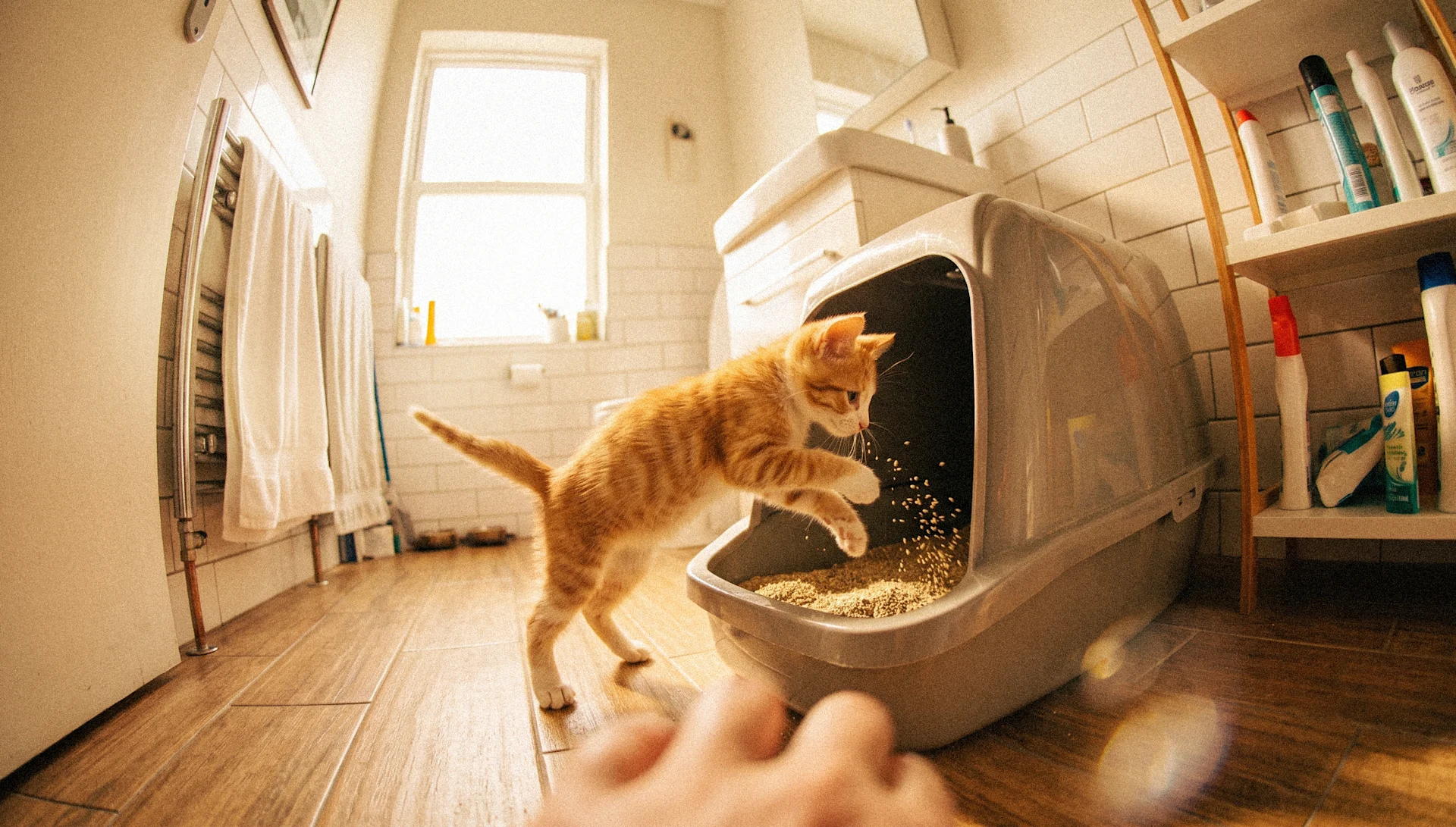
Start with an open tray. Some cats prefer to be hidden when they go to the toilet and some would rather see the room. You will not know which yours is until they show you. An open tray suits most kittens and lets you see what is happening. If your kitten seems nervous or is startled easily, a covered tray gives them privacy and is worth trying.
Get one more tray than you have cats. One cat needs two trays, two cats need three. Extra trays mean a cat always has somewhere acceptable to go, even if one tray is dirty or another cat is sitting near it.
Clumping litter is the easiest starting point. It is quick to scoop, it is not harsh underfoot, and it makes it obvious how much your kitten is using the tray. Wood pellets are a good alternative and have the advantage of discouraging cats who like to sleep in their litter.
Avoid perfumed litter. Scented litters are made for the owner's nose rather than the cat's. Strong artificial smells put a lot of cats off, and a kitten who dislikes the smell of the tray will find somewhere else to go.
Where you can, match what they were using before. Ask the breeder or the rescue centre which litter the kitten has been using and start with the same one. It removes one unfamiliar thing from a week that is already full of them.
Once your kitten settles on a litter they like, stay with it. Changing litter type is a common trigger for a cat refusing the tray.
Our new kitten checklist has the rest of the shopping list.
Where to put the litter tray
Keep the tray well away from food and water bowls. Cats keep eating and going to the toilet separate by instinct, and you can see the same pattern in cats living wild. A tidy row of bowls and tray along one wall looks sensible to us, but not to a cat. Put them in different parts of the room, or different rooms entirely.
Choose somewhere quiet, private and easy to reach. A hallway, a busy kitchen or anywhere with a lot of through traffic is a poor choice for a small kitten who is still nervous of the house. Pick a corner where they will not be walked past mid-use, and make sure they can get to it without going through a door that might be shut.
In a multi-cat home, spread the trays out. Putting all the trays in one place defeats the purpose of having several, because one cat can still block access to all of them. Separate rooms and separate floors work well. If you have an older or less mobile cat, give them a tray on the floor they spend most time on.
Make sure nobody can be ambushed at the tray. Cats who otherwise get on well will still pounce on each other in play, and a cat who gets jumped on while using the tray can quickly become wary of it. A tray with a clear view and a clear exit is much less likely to cause this.
Keep the tray clean. A dirty tray is one of the two things cats most often refuse a tray over, alongside where it has been put. Scoop it daily and wash the tray out regularly. Some cats will not go back into a tray they have used even once since it was last cleaned, so with a fussy cat, more trays and more frequent scooping is the answer.

Get our latest guides, stories and offers by email
The step-by-step training routine
1. Set the tray up before your kitten arrives. Have it in place, filled and in its final position on the day they come home, so they can find it while they are exploring rather than needing it and not knowing where to go.
2. Show them where it is. When your kitten first comes out of the carrier, put them gently into the tray so they know it is there. Let them step straight out again if they want to. That is fine, they have registered it.
3. Settle them near the tray after meals, naps and play. These are the three moments a kitten is most likely to need it. Carry them over and put them down beside the tray, then leave them to it.
4. Never hold them in the tray or force them to stay. Forcing the issue creates exactly the nervousness about the tray you are trying to avoid. Put them near it and let them make the decision.
5. Reward them when they use it. A small piece of chicken, a dental treat or a lick treat straight afterwards works well. Over the first few weeks you can move from food to attention and praise, so you are not adding much to their daily food.
6. Watch for the signs they need to go. Kittens do not ask, circle or pace the way puppies do. What you will see is sudden digging or scratching at the floor, carpet or a rug. That is the moment to lift them into the tray.
7. Keep going until it is consistent. Success is not one good day. It is your kitten choosing the tray every time without being taken to it.
“The good news for kittens is they have a natural instinct to dig in and bury their waste. So litter training is often about setting them up for success rather than teaching them from scratch.”
Layla Beakhouse / Feline Specialist
Handling accidents outside the tray
Do not punish, shout at or spray your kitten. Cats do not connect being told off with something they did a moment ago, so punishment does not teach them anything about the tray. What it does teach them is that the tray, or you, is something to be wary of. Cats respond to any strong reaction, good or bad, and they remember it.
Clean the spot with an odour-removing cleaner. An ordinary household cleaner can leave a scent that a cat can still detect, and that lingering smell will bring them back to the same spot. A cleaner made to break down pet odours is worth keeping in the cupboard from day one.
Move them to the tray, calmly. If you catch your kitten in the act, lift them into the tray without fuss so the connection is made. You can also put the soiled litter or paper into the tray, which leaves the right scent in the right place.
Then work out what changed. An accident is almost always information, so run through the list. Is the tray clean, is it in a quiet enough spot, is there enough privacy, has the litter been changed, has anything else in the house changed recently? One of those is usually the answer.
If a cat who was reliably using the tray suddenly stops, contact your vet. A sudden change in toilet habits can be the first sign of a urinary or other medical problem, and it is worth ruling that out before treating it as a behaviour issue.
Litter training an older or outdoor cat
The principles are the same, and patience matters more. An adult cat who has always gone outside is not being difficult. They are being asked to use something unfamiliar, often while adjusting to a new home at the same time.
Put soil or grass on top of the litter. This is the single most effective thing you can do for a cat used to going outside. A layer of soil, or soil with a little grass on top, gives them the surface they already recognise.
Offer more than one tray, in more than one place. With an adult cat you are looking for the spot they will accept, and giving them options is faster than guessing. Once you know where they prefer, you can reduce the number.
Give a rescue cat time. A rescue cat is learning a whole house as well as a tray. Keep the routine steady, keep the tray in the same place, and reward the times they get it right rather than reacting to the times they do not.
Key takeaways
Kittens already have the instinct to dig and bury, so litter training is mostly about giving them the right setup.
Buy a tray big enough for your kitten to turn around and dig in, and buy for the adult size if you have a large breed.
Have one more tray than you have cats, and spread them around the house rather than lining them up in one spot.
Keep the tray well away from food and water bowls, in a quiet spot your kitten can always reach.
Clumping or wood pellet litter works well. Avoid perfumed litter, and do not change litter type once your kitten is settled.
Settle your kitten near the tray after meals, naps and play, and reward them for using it. Never hold them in it.
Never punish an accident. Clean with an odour-removing cleaner, then work out what changed.
For a cat used to going outside, put soil, or soil and grass, on top of the litter so the surface is one they recognise.
Contact your vet if a cat who was using the tray reliably suddenly stops.
Frequently asked questions
How long does it take to litter train a kitten? Usually not long. Most kittens arrive already litter trained from the breeder or rescue centre, having used a tray in their last home. Your job is then just to show them where the tray is in your house. Kittens starting from scratch tend to pick it up faster than puppies learn toilet training.
How many litter trays does one kitten need? Two. The rule is one more tray than the number of cats, so a single kitten needs two trays and two cats need three.
Why has my kitten stopped using the litter tray? Start with the tray itself. It is usually cleanliness, the location, a lack of privacy, or a recent change of litter. If none of those apply and the change was sudden, contact your vet, because urinary problems are common in cats.
Should I use a covered or open litter tray? Start with an open tray, as it suits most kittens and lets you see how they are getting on. Switch to a covered tray if your kitten seems nervous or is easily startled while using it.
Can you litter train an adult cat that has always gone outside? Yes. Put a layer of soil, or soil and grass, on top of the litter so the surface is one they recognise. Offer trays in more than one location until you find the spot they will accept.
Do I need to change the litter type as my kitten grows? No. Once your kitten is settled on a litter they will use, stay with it. Changing litter type often causes a cat to start going elsewhere.
For more, browse our Behaviour & training guides, or read how to look after a kitten in its first year.
Natalie Brundish
Editor, HowPets