Updated
In short
Puppy toilet training starts the day your puppy arrives, and it lands on average somewhere between sixteen and twenty weeks. There are no fixed timings in between. Your job is not to run a schedule. It is to spot the moments your puppy is about to go, and to be there to reward them for getting it right outside.
Authored by
 Steve Mann
Dog Trainer & Behaviourist
Table of contents
Most of the difficulty owners have with toilet training comes from treating it as a rota rather than a relationship with a very small bladder. Let me take you through how I would actually do it.
When to start toilet training
Toilet training starts today. It should always start immediately.
Most owners won't get their pup until around eight weeks. But toilet training can actually begin at three to four weeks with a good breeder. So by the time your puppy comes home, some groundwork may already be laid. Either way you are picking up an existing process, not starting a new one. There is no readiness stage to wait for.
The step-by-step routine
With toilet training there are no specific timings. You are much better giving your puppy more opportunity than not, so they can earn the reinforcement for going outside.
What you are watching for is body language. Sniffing a particular spot, circling, and particularly circling and sniffing together, are major red flags. Sometimes a puppy starts pacing a little frantically. If you are lucky there will be some pacing near the exit, commonly the back door.
Those are your windows of opportunity. Beyond them, the times to grab are predictable:
After waking up, from any sleep or nap. After eating. After play. After visitors, or any excitement. And generally at least every couple of hours.
When you spot the signs, pick them up, put them outside, and wait. This next part matters more than people realise. Wait until they have actually finished going to the toilet, and then reinforce.
Quite often an owner is delighted they spotted the signs. They carry the puppy out, the pup starts going, and they bring them back indoors before the job is done. You have then rewarded an interrupted job.
As for the wider routine, work out when your pup will wake, eat, and have their play or training sessions. Your routine is simply straight after those. Everyone's day is different. Some people go to work, some work from home. So don't be too rigid about building a routine at all.
Watch the pup and react, and that will build your routine for you. Let the puppy dictate it initially, rather than trying to make the puppy fit yours.

Get our latest guides, stories and offers by email
Crate training and toilet training together
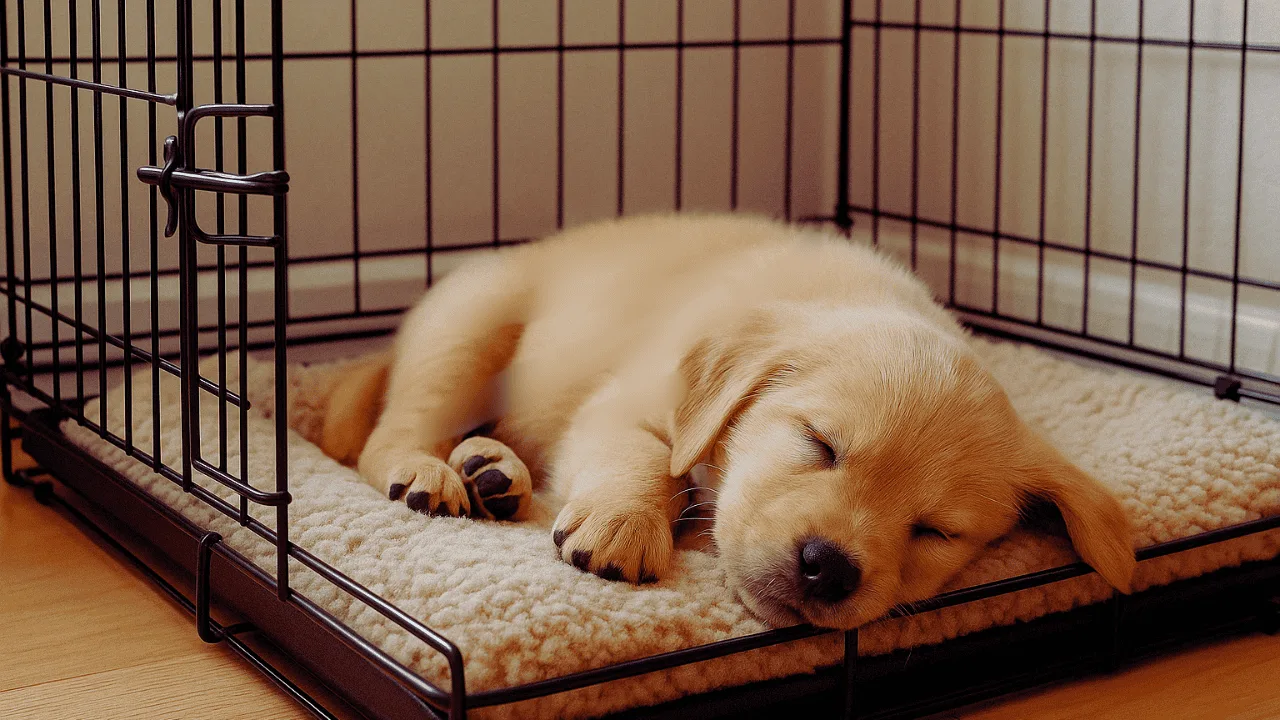
The two work together, and it is the main reason I recommend a den.
It is in the interest of a puppy to toilet away from where they sleep and away from where they eat. A correctly sized crate uses that instinct. If it is too big, though, you undo it entirely, because the puppy can comfortably sleep in one corner and comfortably toilet in the other.
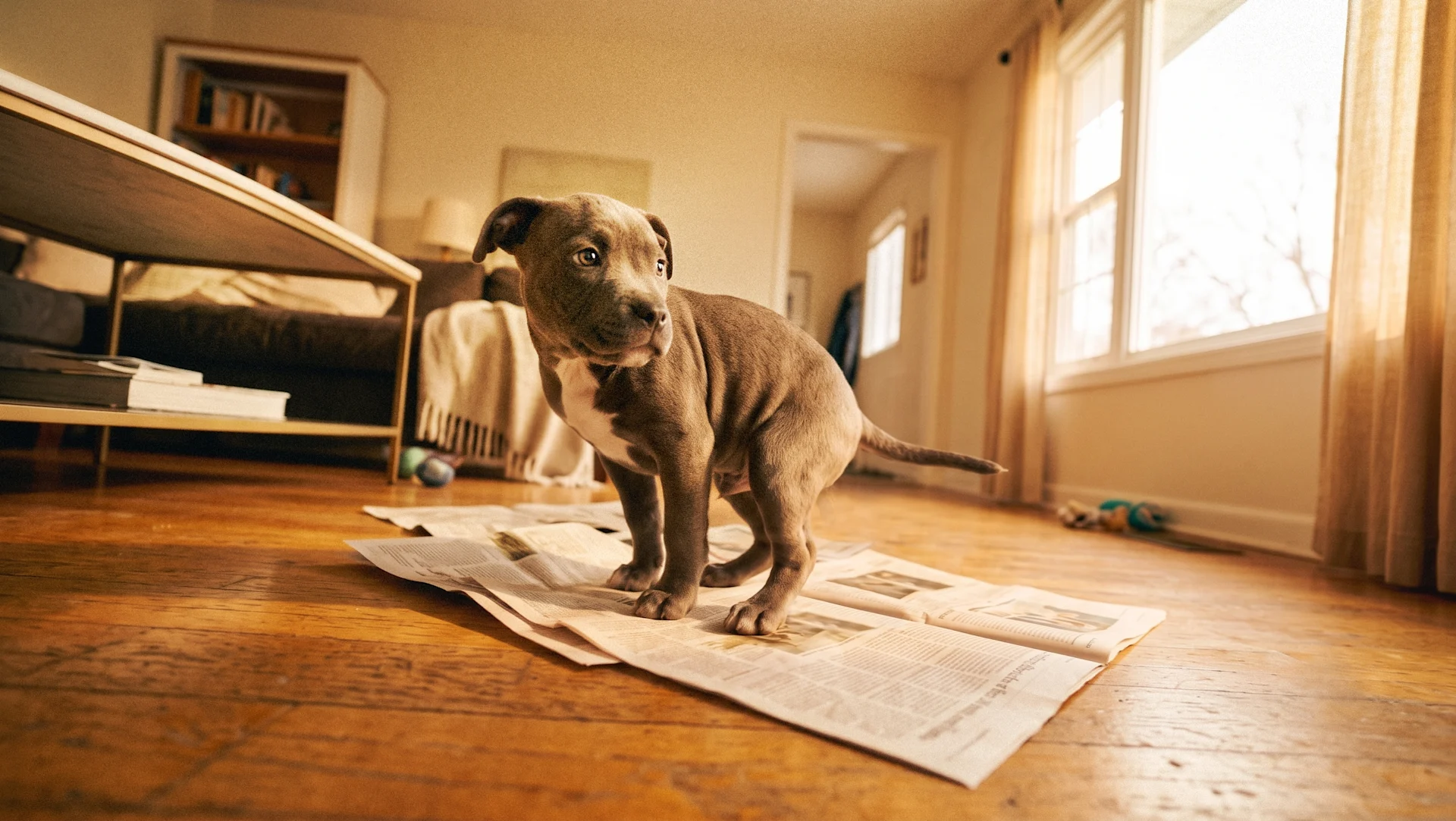
I am not a fan of puppy pads. The problem is the puppy uses the pad by that door for several weeks. Then the pad gets lifted, because the owner wants to teach them to go outside. But the puppy is still weeing in that spot, because we spent weeks telling them it was fine to go there.
Just start as you mean to go on.
Handling accidents
“The last thing we want is the pup to feel that they're being told off for going to the toilet inside. If they do, it will give a bad association to the owner. That's the last thing we want.”
Steve Mann / Dog Trainer & Behaviourist
The biggest single mistake owners make is a reflex, and we are only human. The puppy makes a mistake and the reflex is to tell them off. Or even just a sharp "no", or a loud noise, or an attempt to interrupt. Most owners are not trying to punish the dog at all.
But the consequence is the same. The puppy learns that a human being present while they go to the toilet is a bad thing. I thought you were safe, I thought you were my mate, and now you have become a bit awkward.
That association is hard to undo. It pushes a puppy towards going somewhere out of sight instead, which is the opposite of what you want.
Clean it up, say nothing, and get back to catching the wins outside.
Night-time toilet training
During the night, I don't recommend that the owner sets an alarm.
People are told to set an alarm every hour or every ninety minutes and get up. It's bonkers. You set the alarm, you wake up, you go through, and the puppy is still asleep. You are trying to force a schedule onto the puppy, and you are torturing yourself getting up when you don't need to.
If you have a puppy, you care, and you will be tuned in. It is like having a baby. Any sort of noise and you will be aware anyway. So let the puppy be the alarm.
If you get that pacing, or the frantic vocalisation that says they need to go, pick them up and bring them out to the garden at 3am.
Having the den next to your bed makes this far easier. You hear them at the first sign, rather than thirty seconds or a minute later.
How long does it take?
Realistically, toilet training keys in and lands on average at sixteen to twenty weeks, so four to five months.
You can make major improvements well before that, and the trouble is owners think they have cracked it, as though it were a one-off event. Then there is some excitability, or a slightly heavier meal, or a slightly longer sleep, and the pup has an accident. Like all training, it's a process, it's not an event.
On breed, whether it is quicker for bigger or smaller dogs is six of one and half a dozen of the other. What I find is that owners are a bit more on it with a bigger breed, because an accident is a bigger accident. Smaller breeds have smaller bladders and faster metabolisms, so they generally need more toilet breaks.
If you don't have a garden, the rules do not change. The physical needs of the pup remain the same. Bring them outside at the appropriate times and reinforce the behaviour you want.
I have worked with owners in Shanghai, where there are a lot of apartments, and in Greece, where apartment living is the norm. You would think not having a garden would make it harder. In practice I find those owners are more disciplined about it, and more on it. Sometimes if you have a garden it is tempting to leave the back door open and let the pup come and go. That actually slows toilet training down. The opportunity is always there, so the edges blur and there is no clear moment for your puppy to earn anything.
Key takeaways
Start on day one. There is no readiness stage to wait for.
There are no fixed timings. Watch for sniffing, circling and frantic pacing, and go out after waking, eating, play and excitement, and at least every couple of hours.
Wait until your puppy has finished before you reward them.
Never tell a puppy off for an indoor accident, including a sharp "no". It teaches them that you being present is a bad thing.
Don't set a night alarm. Let the puppy wake you.
Expect it to land at sixteen to twenty weeks. It's a process, not an event.
Puppy pads create a spot by the door your puppy will keep using after the pad is gone.
Frequently asked questions
Do puppy pads slow down toilet training? In my view yes. The puppy uses the pad by the door for weeks. The pad is then lifted, and they carry on weeing in that spot, because you taught them it was fine.
What age should a puppy be fully toilet trained by? On average sixteen to twenty weeks, so four to five months. Expect occasional accidents after that when something changes, like a heavier meal or a longer sleep.
Can an older puppy or rescue dog still be toilet trained? Yes, just as effectively. If you are struggling with an older dog, rule out medical issues such as an infection first. Then consider confidence. Some dogs are nervous about going outside and hold it in, because they don't want to put their information out on the village notice board.
Should I set an alarm overnight? No. You will end up waking a sleeping puppy and forcing your schedule onto them. You will hear them when they need to go.
What do I do about accidents when I am not there to see them? Nothing, beyond cleaning up. There is no value in a delayed reaction, and a fair amount of harm in one.
Set up the den before your puppy arrives, because a correctly sized crate does a lot of the toilet training work for you. Read our guide to puppy crate training for how to size and introduce it.
For the first few nights specifically, our first night with a puppy guide covers where they should sleep and how to handle 3am.
There is more in our Behaviour & training guides, and how to look after a puppy in its first year shows where toilet training fits.
Steve Mann
Dog Trainer & Behaviourist
Steve Mann has been a dog trainer since 1987 and is the founder of the Institute of Modern Dog Trainers. He is the author of Easy Peasy Puppy Squeezy, the UK's best-selling dog training book, and presents the BBC Maestro course Dog Training with Steve Mann.