
Updated
In short
The first night with a puppy has one job, and it isn't sleep. It's safety. Everything you do on the first night, the first few nights and the first few weeks should be motivated by your puppy feeling safe. Once they feel safe, the confidence, the trust and the bond follow, and the dog copes better. You can build in independence reliably later.
Authored by
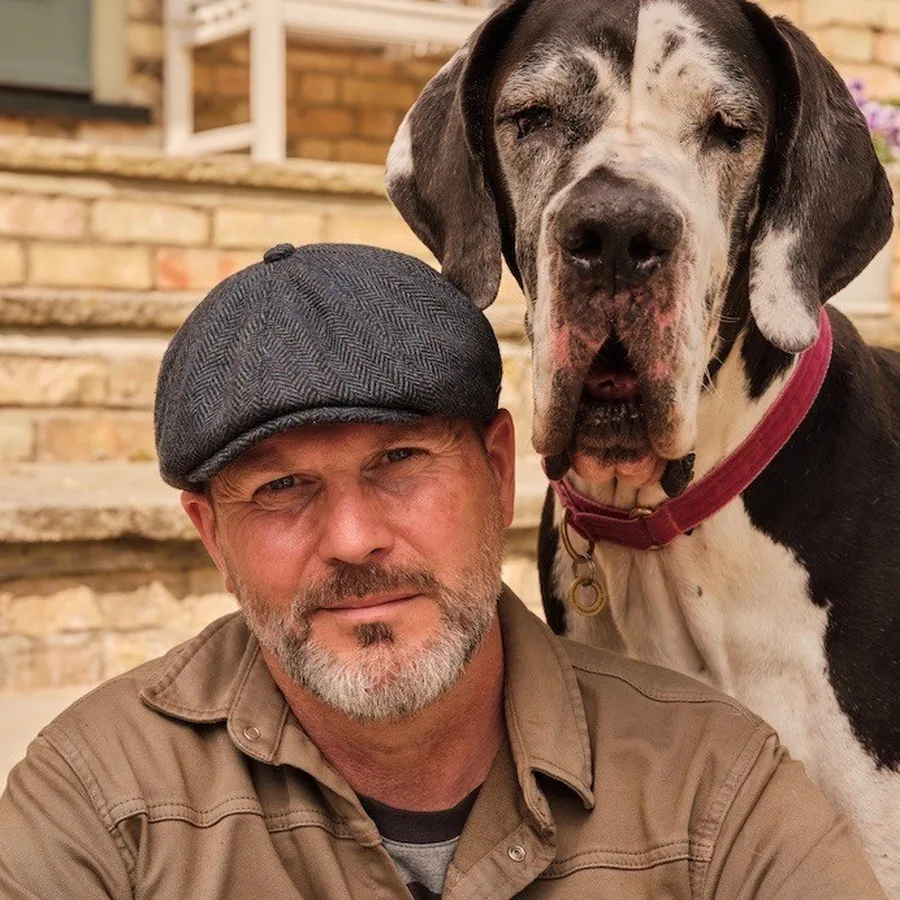 Steve Mann
Dog Trainer & Behaviourist
Table of contents
Coming away from the litter and from mum is an absolute head trip for a puppy. The only planet they have known has gone, and they have arrived on a different one. Almost everything worth doing on night one follows from taking that seriously.
Before bedtime: setting up
Pick your puppy up early in the day. That gives them a full day to get acquainted with you, your environment, and all the different sights, sounds, smells and textures. They arrive at bedtime acclimatised and pleasantly tired, which gives you half a chance.
Get the den set up and used before dark. I like a crate with a den or playpen around it, so the puppy can come and go from the crate but is still enclosed. That gives them a bit more agency and choice. Through the day, put them in there for any treats, any meals, any naps. Make it the norm from day one, and make it the norm in daylight while you are still flitting around in sight, so the den never predicts total isolation.
Bring a comfort blanket back from the breeder. Something that has been in the litter and in the den, that smells of mum and of the littermates. You use it to taper the old into the new. Pick it up when you pick up the puppy. It will help in the car and it will help in the den at night.
Water, always. Your puppy should have access to water 24/7. Starving a puppy of water to try to control toilet training is bonkers and not right at all.
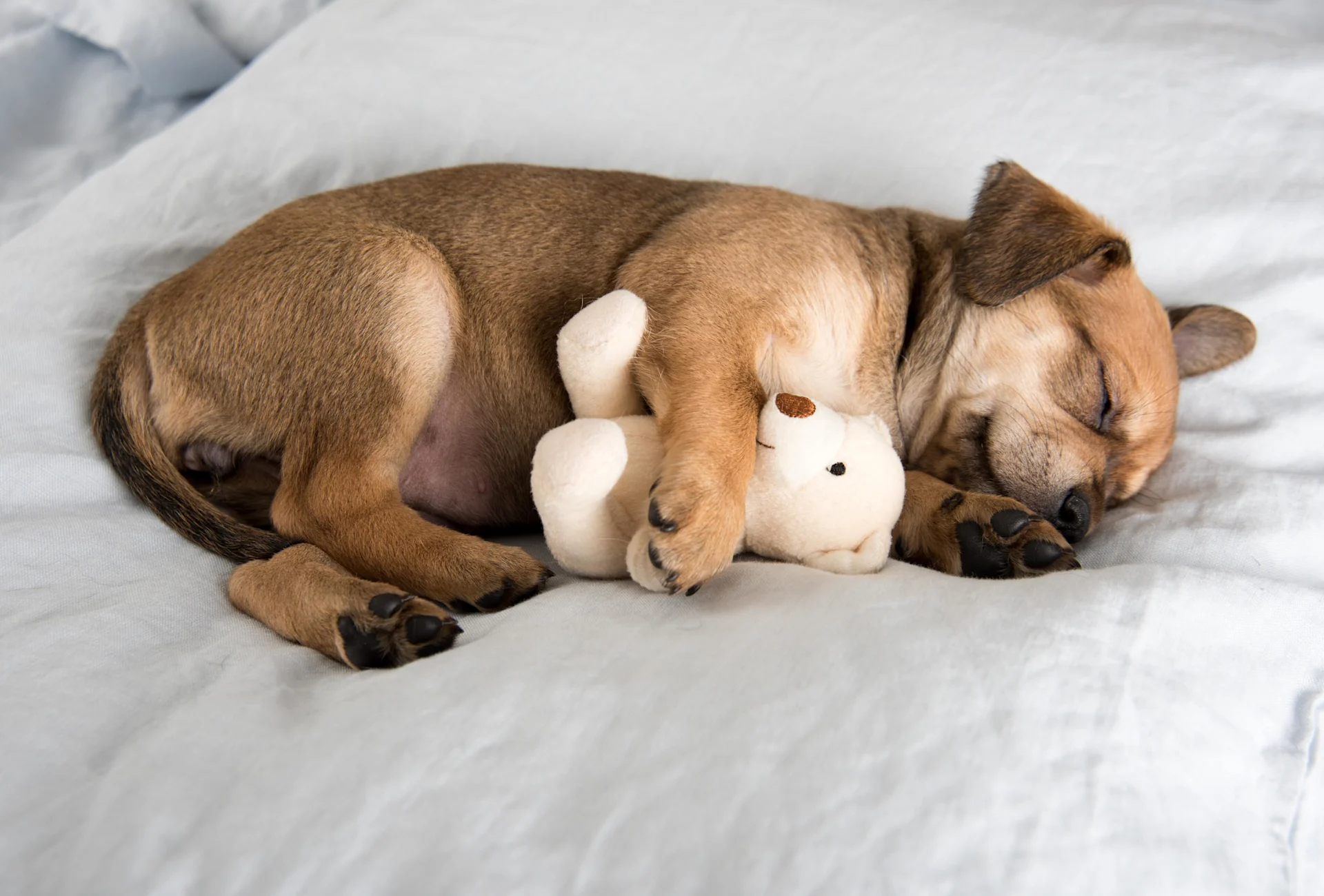
Warmth that mimics a litter. A hot water bottle, or one of the microwavable heat pads, to simulate mum and littermates. Every night before this one, that pup has been curled up against other small warm mammals. You can also get teddy bears with a heartbeat inside them.
Where should your puppy sleep?
In an ideal world, and this is what I would do myself, the puppy is upstairs in my bedroom. In their den, on the floor next to my bed.
That reassures the puppy that they are in a safe environment. They are now living with someone they can trust, someone who has their back. I might well dangle an arm down over the side of the bed so there is that connection there.
It also helps me practically. I will be getting up to bring the pup out a couple of times a night anyway. So I learn their physical rhythm, when they need the toilet and when they go into deep sleep. It accelerates the toilet training.
Some people will want the pup downstairs, and that is a legitimate choice. Be aware it means a lot more going up and down stairs, which is a job you don't need. It also makes you looser on the toilet training, because you react a minute later rather than in the first ten seconds.
What I would steer you away from is the old advice to put them downstairs and let them cry it out.
“Just because they've stopped crying, it doesn't mean they now feel good. A prisoner in the cowboy movie, they get put in gaol and they're like, let me out, let me out. They might not be doing that after three days, but it doesn't mean they're now happy about being in prison.”
Steve Mann / Dog Trainer & Behaviourist
You can move the den downstairs later, once the puppy has repeated being in it alone during the day plenty of times. Start where the safety is.

Get our latest guides, stories and offers by email
Handling crying and whining
What actually helps overnight is all the preventative work, not your response in the moment. It isn't a question of the puppy whining and now what do I do. Do everything you can to stop the whining starting in the first place.
That comes back to safety, security, the bond, trust, and you having a presence there. Dangling your arm off the side of the bed into the den, the teddy bears, the heat mats, all of that is preventative. It means the puppy doesn't have the emotional drive to whine.
Because why would they be whining? They are whining for comfort, or they are whining for connection. If they are already getting both, there is no fuel behind that fire. It's called et-epimeletic behaviour, care-seeking behaviour, and if they are already receiving the care, they don't need to start.
So yes, you can check on a crying puppy at 3am. The better question is what you did before bedtime to make it unnecessary.
Toilet breaks through the night
Don't set an alarm.
People are told to set one every hour or ninety minutes and get up. It's pointless. You wake yourself, you go through, and the puppy is still asleep. You are forcing your schedule onto them and torturing yourself in the process.
If you have a puppy, you care, and you will be tuned in, exactly like having a baby. Any sort of noise and you will be aware anyway. Let the puppy be the alarm.
When you get the pacing, or the frantic vocalisation that says they need to go, take them out to the garden. Wait until they have finished before you make a fuss of them. Having the den next to your bed is what makes this workable, because you catch it at the first sign.
The first morning
First thing, always outside to the toilet. It is the first opportunity of the day to reinforce a behaviour, and the moment your puppy most wants to go anyway. Don't interact too much until they have gone, which is difficult with a new puppy in front of you. Once they have, all bets are off, make as much fuss of them as you like.
Then, if the weather is decent, just hang out. Sit on the grass, a few belly rubs, have your cup of tea outside.
Too often we train the puppy, and therefore train the dog, that mornings are frantic. We get up, it's rush, get inside, feed, sort this, sort that, and we condition a high-octane pace. Then owners report six months later that the dog is bonkers first thing. Dogs will always do what they have been trained to do. So go as slow as you possibly can in the morning.
After that, pop them in the den with their breakfast in a stuffed food toy rather than a bowl. That is your first positive separation of many. Come and go, out of sight, into the garden, back again, building the puppy's robustness. Then leave a chew in there, so the puppy doesn't learn "finished my food, now I come out".
One rule will serve you for years. Outside is for the high-octane stuff, chasing, rough and tumble. Inside is for resting and digesting. Puppies build associations with environments, so if you want a dog who is calm indoors, be calm indoors with them.
Key takeaways
The goal of night one is safety, not sleep. Everything else follows from it.
Collect your puppy early in the day so they arrive at bedtime tired and acclimatised.
Bring a blanket from the breeder that smells of mum and the litter.
Put the den next to your bed for the first few nights. You can move it downstairs later.
Crying is best prevented before bedtime, not managed at 2am.
Don't set a night alarm. You will wake a sleeping puppy.
Keep the first morning slow, or you will train a dog who is frantic at 7am for years.
Frequently asked questions
Where should a puppy sleep on the first night? In their den, on the floor next to your bed. It reassures the puppy, builds the bond, and makes night-time toilet trips far easier to catch.
Should I let my puppy cry it out? No. A puppy that stops crying after three nights has not necessarily started feeling safe, it has just stopped asking. You are better investing in the security that prevents it.
Is it OK to check on a crying puppy at 3am? Yes. And if the preventative work is done before bedtime, you will find you need to far less often.
Can my puppy have water overnight? Yes, always. Restricting water to manage toilet training is not right at all.
How long before my puppy sleeps through? Toilet training generally lands at sixteen to twenty weeks, and night-time settling improves alongside it. Expect broken nights early on and treat it as a process rather than an event.
Get the den and the comfort blanket sorted before collection day, not on the evening itself. Our puppy crate training guide covers how to size the crate and introduce it, so night one is not the first time your puppy has seen it.
Then read our puppy toilet training guide for the routine that starts the following morning.
For the rest of the first year, see our first-year puppy guide, or browse more New pet & life changes guides.
Steve Mann
Dog Trainer & Behaviourist
Steve Mann has been a dog trainer since 1987 and is the founder of the Institute of Modern Dog Trainers. He is the author of Easy Peasy Puppy Squeezy, the UK's best-selling dog training book, and presents the BBC Maestro course Dog Training with Steve Mann.