Updated
In short
Before your puppy arrives you need a collar with an ID tag, a harness, a crate or bed, a car carrier, bowls, the food the breeder is using, and toys they can chew and work for. Buy the collar and harness early, so your puppy can get used to wearing them long before they need to.
Authored by
 Natalie Brundish
Editor, HowPets
Reviewed by
 Dr Alex Crow
Veterinary Surgeon
Table of contents
Preparing the house matters more than the shopping. Most of what a puppy gets into is everyday stuff adults have stopped noticing.
Essential kit before your puppy arrives
A collar with an ID tag, and this one is the law. Every dog in a public place must wear a collar showing the owner's name and address, either inscribed on the collar or on an attached tag. A phone number is not legally required, but I would recommend adding one, because it is usually what gets your dog back to you quickly.
A harness as well as a collar. Get both well in advance. The point is not the walk, it is that a collar, a harness and a jingling ID tag are all deeply strange to a puppy. Introduce each one separately, at home, weeks before you plan to use them, so that wearing them is old news by the time you go anywhere.
A crate or a bed, and somewhere to be enclosed. See the safe space section below.
A carrier for the car. You do not want a puppy loose in the car, and you want somewhere to contain them when you need to. A car carrier works, and for a small puppy even a cat carrier is fine. The Highway Code asks you to make sure a dog is suitably restrained in a vehicle. It names a seat belt harness, a pet carrier, a dog cage or a dog guard. A carrier only counts if it is secured, and a crash-tested harness is the other option. You will be driving to the vet within days of collecting them, so sort this before they arrive.
Shallow food and water bowls, plus the food your breeder or rescue centre is already using.
When it's time to move on from the breeder's food, our best puppy food guide shows you how to read the label.
A basic dental kit. This is the item almost nobody buys and it pays off for years. A dog toothbrush and dog toothpaste, used from the start, gets your puppy used to your finger in their mouth while they are young and impressionable. Start at eight weeks and teeth cleaning is normal; start at three years and it is a fight.
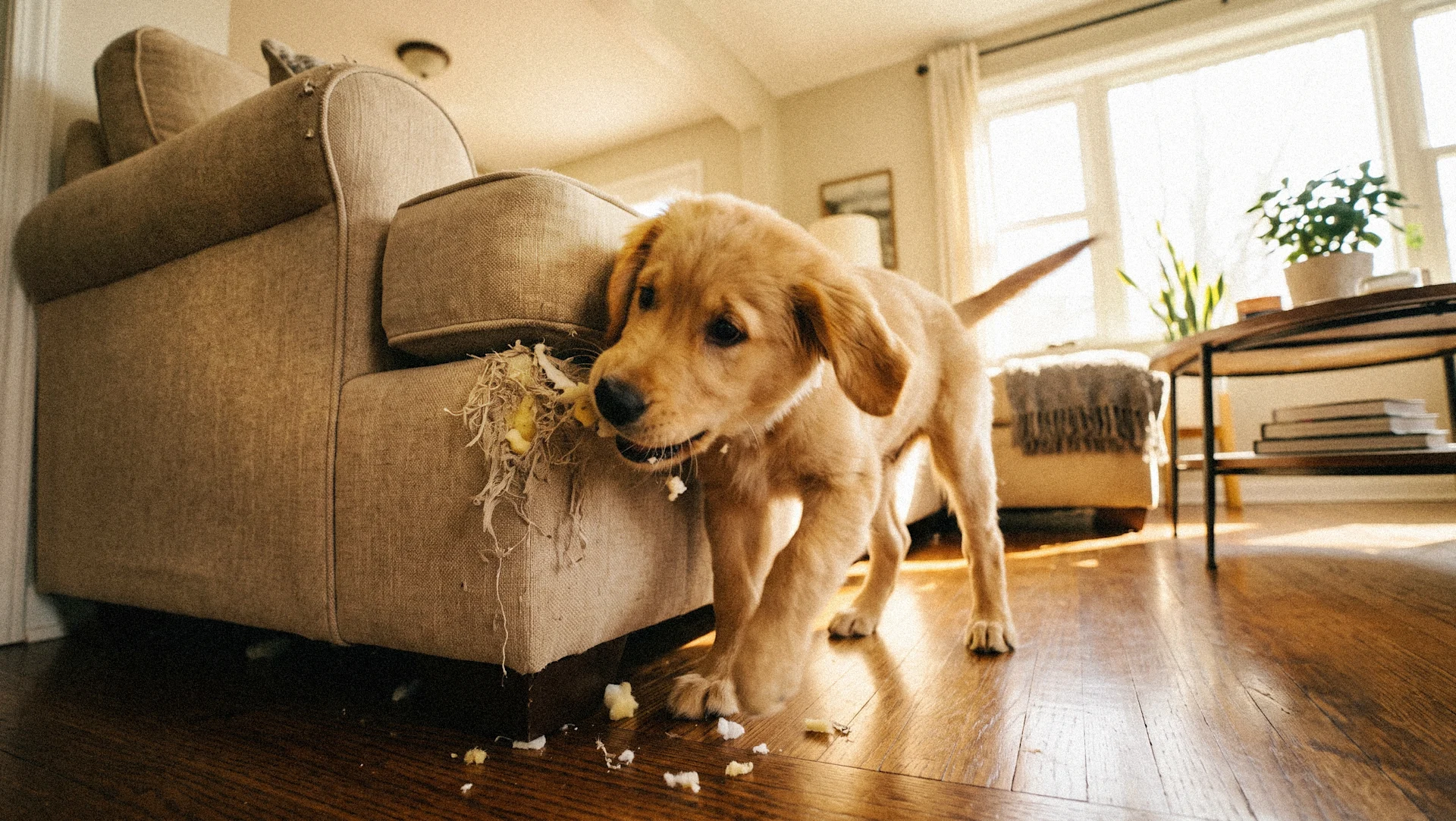
Toys that make them work. Chew toys, food-dispensing toys and puzzle games. A puppy with nothing to do will find their own entertainment, and it is usually chewing the furniture.
Digital kitchen scales. Weigh the food rather than scooping it, and weigh your puppy weekly while they are still small enough to sit on the scales. Portion creep starts in week one.
A treat pouch and tiny soft treats. Training runs on a reward arriving fast, which means having them on you rather than in a cupboard. Count the treats inside the day's food and keep them to no more than about 10% of daily calories, so training does not quietly turn into overfeeding.
Puppy pads: optional, and worth understanding before you buy them. Plenty of owners use them, and they can be useful if you are on an upper floor or have no quick access to a garden. Be aware of the trade-off, though. A pad teaches your puppy that there is an acceptable place to go indoors, and every week they use one is a week spent learning a habit you will later need to undo. If your aim is for your puppy to go outside, the fastest route is usually to take them outside from day one rather than to route them via a pad.
Read our full guide to puppy toilet training
“It's really useful to get in the habit of cleaning their teeth early. A basic dental kit, a bit of doggy toothpaste, just get them used to the sensation of having your finger in their mouth, because the earlier you start that, the more amenable they'll be to it.”
Dr Alex Crow / Veterinary Surgeon
How to puppy-proof your home
The hazards are rarely dramatic. They are everyday things adults have stopped noticing.
Cables. At puppy height, trailing and chewable. Tuck them away or cover them.
Plants, indoors as well as out. A surprising number of common house plants are poisonous to dogs, and this is the hazard owners are least likely to have thought about.
Indoors, the ones worth knowing are aloe vera, peace lily, snake plant (mother-in-law's tongue), philodendron and pothos or devil's ivy, sago palm, dracaena, poinsettia, English ivy, Swiss cheese plant and weeping fig. Most cause mouth irritation, drooling, vomiting or diarrhoea. Sago palm is the one to take most seriously, because it can cause liver failure.
Outdoors, watch for daffodil bulbs, foxglove, rhododendron, yew, hydrangea, wisteria, delphinium and larkspur, iris, and acorns and conkers. Tomato and potato plants are toxic too, as are grapes and vines.
Walk both the house and the garden before your puppy arrives, and move anything on that list out of reach. The lists above are not exhaustive, so look up anything you are unsure about before your puppy comes home rather than guessing.
If you think your puppy has eaten something they should not have, ring your vet straight away rather than waiting to see whether they become unwell. Your vet can tell you whether the amount matters.
Steps. A step out to the garden is nothing to an adult and a real obstacle to a small puppy. If yours is steep for the size of dog you are getting, build a smaller intermediate step.
Hard floors, which people never think of. Consider what your puppy is coming from. At the breeder they were probably on paper, carpet or something with grip. Arriving into a house with shiny wooden flooring is disconcerting for them. A puppy who cannot get any grip is a puppy who is frightened of moving around. Put a few rugs down on the routes they will use.
Then look at those rugs again. A rug has four corners that are ideal for chewing, and a puppy will find all of them. If a rug is precious, it should not be on the floor for the first few months.
Anything at floor level you would not want chewed. Get down and look at the room from your puppy's height. That is the fastest way to see what they will find.

Get our latest guides, stories and offers by email
Setting up a safe space
Your puppy needs somewhere that is theirs, where nothing is asked of them and nobody bothers them.
A crate inside a playpen works better than a crate alone. The crate is the comfortable sleeping part, and the pen around it gives your puppy room to move and the ability to back out. Being able to back away is what makes an animal comfortable going forward, and a puppy who can leave a space voluntarily settles into it far faster than one who is shut in.
Put the good things in there and let them find them. Meals, chews, treats and toys should all appear in that space. Do not put your puppy in and then produce the treat. Put the treat in first and let them discover it.
Put it where everyone else is. A spare room with the door shut is not a safe space, it is being left out. Your puppy wants somewhere they can retreat to and still see what the family is doing.
Read our full guide to puppy crate training
Your first-week shopping list
Collar and ID tag showing your name and address, with a phone number recommended, and a harness.
Crate, and a playpen if you have room for one.
Bed and bedding.
Car carrier or a crate that fits the car, secured rather than loose on a seat.
Food and water bowls, and the same food the breeder is using.
Digital kitchen scales, for weighing food and for weekly puppy weigh-ins.
Dental kit: dog toothbrush and dog toothpaste.
Chew toys, food-dispensing toys and puzzle feeders.
Treat pouch and tiny soft treats, counted inside the day's food.
Cleaning kit: an enzymatic cleaner for accidents. Avoid ammonia and bleach-based products, which smell like urine to a dog and advertise the spot as a toilet.
Puppy pads, if you have decided to use them. See the note above on the trade-off.
Poo bags, for clearing the garden from day one as well as for walks later.
A few rugs, if you have hard floors.
Pet insurance: protects you from large bills if your pet gets sick or hurt. Most standard policies do not cover health issues your pet already has before you sign up.
Booking the first vet visit
Register with a practice before your puppy arrives.
Book a health check in the first week. A vet will check for things that are easy to miss and important to catch early, such as hernias, cleft palates, heart murmurs, and whether both testicles have descended in a male puppy. It also gives you someone who knows your dog before you need them urgently.
Check the microchip is done and registered to you. All dogs in the UK must be microchipped and registered by eight weeks old, and you can be fined up to £500 if they are not. The breeder should have done it, but the legal responsibility becomes yours once the puppy is yours. Check the registration is in your name rather than the breeder's, that the database is an approved one, and update the details whenever you move or change your number. The same £500 fine applies for failing to register.
Confirm where they are with vaccinations and book whatever is outstanding. The primary course is usually two injections. Eight weeks is the standard age for the first, though some are licensed from six or seven, with the second two to four weeks after that.
Book the second appointment before you leave the first one. "We will ring next week" is how a course lapses, and a lapsed course can mean starting it again and paying for it twice.
Read our full guide to the UK puppy vaccination schedule
Ask about socialisation while you are there. The window that matters opens at around three weeks of age and is largely closing by twelve to fourteen weeks, before the vaccination course finishes. Your vet can tell you what is safe to do locally in the meantime.
Budget for the first year. A puppy's first year typically costs between £2,190 and £2,950, and more again for a large dog. Roughly:
First-year cost | Typical range |
|---|---|
One-off kit and setup, including microchip and first vaccinations | £241 to £545 |
Neutering | £150 to £400 and above, rising with size |
Running costs for the year: food, treats, insurance, routine healthcare, grooming and poo bags | £1,800 to £2,000 |
Total, first year | £2,190 to £2,950 |
Where these come from. The kit and running costs are Battersea Dogs and Cats Home's figures, published 26 June 2026. The neutering range is Dr Alex Crow's, split by size because a small dog and a giant breed are not comparable. The running costs include grooming and daycare, which plenty of owners never pay for, so treat the total as the higher end of realistic rather than a floor.
Key takeaways
A collar showing your name and address is a legal requirement in public places. A phone number is not required but is usually what gets your dog home.
Buy the collar and harness early and let your puppy wear them at home long before the first walk.
A dental kit from week one is the most-skipped item on any puppy list.
Puppy-proof at floor level, covering cables, toxic house and garden plants, steps and rug corners. Sago palm, peace lily, snake plant and philodendron are common indoor offenders.
Put rugs down if you have hard floors. A puppy who cannot grip is a puppy who will not move.
A crate inside a playpen beats a crate alone, because your puppy can back out.
The Highway Code asks for a dog to be suitably restrained in a vehicle. A carrier counts only if it is secured.
All dogs in the UK must be microchipped and registered by eight weeks, with a fine of up to £500.
Book a vet check in the first week and ask about socialisation, which starts before vaccinations finish.
Budget £2,190 to £2,950 for a puppy's first year, and more for a large dog.
Frequently asked questions
What do I need to buy before getting a puppy? A collar and ID tag, a harness, a crate or bed, a car carrier, food and water bowls, the breeder's food, a dental kit, kitchen scales, a treat pouch, and chew and puzzle toys.
Is a dog ID tag a legal requirement in the UK? Yes. In a public place your dog must wear a collar showing your name and address, on the collar itself or on an attached tag. A phone number is not required by law but is worth adding.
When does a puppy legally need to be microchipped? By eight weeks old, everywhere in the UK. The breeder should arrange it, and you can be fined up to £500 if it is not done or not registered.
Are house plants poisonous to dogs? Many common ones are, including aloe vera, peace lily, snake plant, philodendron, pothos and sago palm. Sago palm is the most serious, as it can cause liver failure. Most others cause mouth irritation, drooling or vomiting.
Are lilies poisonous to dogs? True lilies are a danger to cats rather than dogs, where even pollen on the fur can cause fatal kidney damage. Peace lily and lily of the valley are not true lilies and both are toxic to dogs, which is where the confusion comes from. Check the specific plant rather than assuming.
How do I puppy-proof my house? Look at each room from floor level. Deal with cables, poisonous garden plants, steep steps, chewable rug corners, and shiny floors a puppy cannot grip.
What is the best safe space for a puppy? A crate inside a playpen, put where everyone else is rather than in a room on its own. Your puppy can sleep in the crate and still move around and back out, which is what makes them comfortable using it.
Do I need puppy pads? No, they are optional. They help if you are upstairs or have no quick garden access, but they teach your puppy that going indoors is acceptable, which you then have to undo. Taking them outside from the start is usually quicker.
When should my puppy first see a vet? Within the first week, for a health check. Register with the practice before your puppy comes home.
How much does a puppy cost in the first year? Typically £2,190 to £2,950, and more for a large dog. That covers one-off kit, the microchip and first vaccinations, neutering, and a year of food, insurance, routine healthcare and grooming.
The checklist gets you to collection day. For everything after it, read how to look after a puppy in its first year or browse our New pet & life changes guides.
Sources: Battersea Dogs and Cats Home, The cost of owning a dog, updated 26 June 2026, for the kit and running costs. Neutering figures are typical ranges from a practising UK vet, Dr Alex Crow, correct as at September 2026. The toxic plant lists, including the sago palm warning, were checked against Dogs Trust and PDSA guidance on 2 September 2026. The legal points were verified against primary sources on the same date, namely the Control of Dogs Order 1992 for the collar and tag, gov.uk for the microchipping requirement and the £500 fine, and Rule 57 of the Highway Code for restraining a dog in a vehicle.
Microchip registration
More on microchippingNatalie Brundish
Editor, HowPets