Updated
In short
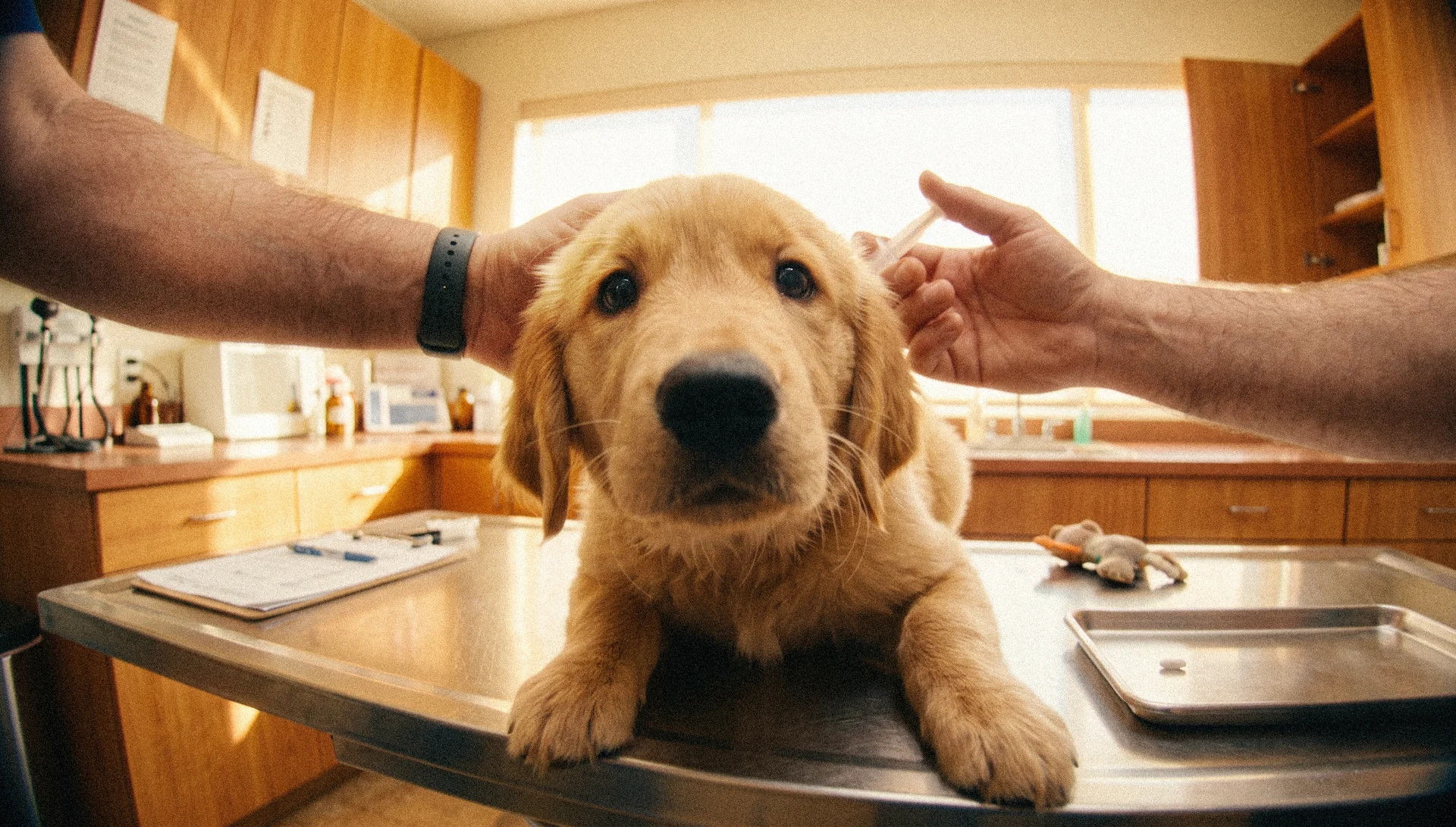
The UK puppy vaccination schedule is usually two injections. The first is at eight weeks, though some vaccines are licensed from six or seven. The second follows two to four weeks later, so most puppies are ten to twelve weeks old for it. Both cover distemper, hepatitis, parvovirus and leptospirosis. Your puppy can start going out in public one to two weeks after the second injection, with some sensible limits until leptospirosis cover is complete, often about three weeks after it.
Authored by
 Dr Alex Crow
Veterinary Surgeon
Table of contents
As a vet, this is one of the things new owners most want a straight answer on. The timings sound fiddly, and there is a lot of noise online about whether vaccines are necessary at all. They are. The diseases they prevent kill puppies.
Here is how the schedule actually works, what each vaccine is for, and what it means for when your puppy can meet the world.
Which vaccinations your puppy needs
Your puppy's primary course protects against four diseases, given as two injections.
DHP covers three of them: distemper, hepatitis and parvovirus. All three can cause fatal disease in puppies. If a dog catches one of these, there is a very real chance they will not survive it. Parvovirus in particular is still common in the UK, and in some areas more than others.
Leptospirosis is the fourth, given alongside DHP. You will usually see it written as L4, which simply means it covers four strains of leptospirosis. Leptospirosis is a bacterial disease spread through rat urine, so it turns up around water that sits still, in ponds, canals, ditches and boggy ground, and anywhere rats are likely to be. Farmland is the classic setting, and it is more prevalent in rural areas than urban ones. It can also pass to humans, which is part of why it is taken seriously.
Distemper and hepatitis are much less common in the UK than they used to be, and that is a direct result of decades of vaccination. They have not gone away, though, and they still appear from time to time, so they remain worth protecting against.
Your vet may offer different leptospirosis options depending on the risk in your area. The practice will know what is circulating locally and which product suits.
The UK vaccination timeline
First injection: eight weeks old. That is the standard. Some vaccines are licensed from six or seven weeks, which is why you will see a window quoted rather than a fixed date. Many breeders will have arranged the first vaccination before you collect your puppy, since puppies usually go home at around eight weeks.
Second injection: two to four weeks later. There are two ways practices do this.
The simple version: the second injection four weeks after the first, containing both DHP and L4 again.
The split version: a DHP-only dose two weeks after the first, with the second L4 given later at the twelve-week mark. It means an extra trip, but it lets your puppy get out and socialise about a week earlier. Ask your own practice whether it is possible, because it varies by vaccine brand. And it comes with limits. Your puppy will not have full leptospirosis cover yet, so keep to fully vaccinated dogs and to pavements until the course is finished.
That earlier socialisation is a real benefit, not a technicality, which is why some practices offer it.
The leptospirosis timing is strict. The two lepto doses usually need to be almost 28 days apart, give or take a day. It depends on the vaccine your practice uses. If you run two or three days over, the course may technically need restarting. It is the one appointment not to let slide.
A third injection at sixteen weeks is becoming more common. The WSAVA, the organisation that writes the international vaccination recommendations, increasingly advises a third dose at sixteen weeks. The reason is antibodies passed from the mother in her colostrum, which in some puppies persist long enough to blunt the effect of the first vaccine. This is more established in the US than here, and I have not seen it routinely in UK practice yet, though some practices do it. It is worth knowing that the protocol may shift this way over time.
The exact gaps depend on which vaccine your practice uses. Brands differ slightly. Your vet will know the timings for theirs, and those are the ones to follow.

Get our latest guides, stories and offers by email
Core vs non-core vaccines
Core means every dog should have it. DHP and leptospirosis are both core in the UK. These are the diseases that kill puppies, and leptospirosis carries the additional risk of passing to people.
Non-core means it depends on your dog's risk. The vaccine is offered after assessing how exposed that particular dog is.
Kennel cough is the main non-core vaccine most owners will be offered. One point causes real confusion. You may see it combined with DHP as DHPPi, but the "Pi" is parainfluenza, which is only one of the agents behind kennel cough. The Bordetella component comes separately, as a squirt up the nose or in the mouth. DHPPi on its own does not give full kennel cough cover. It is generally recommended for dogs mixing with a lot of other dogs, so doggy daycare, a dog walker, boarding kennels, or a busy park. There are two honest caveats. It is not 100% protective, so a vaccinated dog can still catch kennel cough, and kennel cough is not usually life-threatening in the way the core diseases are. That combination is exactly why it sits outside the core list.
Rabies is the other non-core vaccine given in the UK, and it is not needed for a dog that lives here and never leaves. Rabies is effectively eradicated in the UK. It becomes a legal requirement if your dog travels abroad, so it is a travel vaccine rather than a routine one.
“Core basically just means that every dog should have it. That's the DHP vaccine: distemper, hepatitis, parvovirus. These are nasty, sometimes fatal diseases. Leptospirosis is another disease that can pass to humans, and that is classed as a core vaccine as well.”
Dr Alex Crow / Veterinary Surgeon
How much do puppy vaccinations cost?
Prices vary between practices and across the country, in the same way consultation fees do. Location is part of it, and so is what the appointment includes. A longer consultation with a full health check is a different thing from a quick injection.
As a guide, these are typical UK costs:
Service | Average UK cost |
|---|---|
Primary puppy vaccination course (two doses) | £60 to £130 |
Kennel cough vaccine (optional) | £40 to £60 |
Annual booster | £40 to £70 |
Treat those as a starting point and ask your own practice, because the range across the country is real.
Vaccinations are not covered by pet insurance. Insurance exists for the unforeseen, not the foreseen, and routine preventative care sits outside almost every policy, including vaccinations, worming, flea treatment and routine check-ups. A small number of policies do contribute towards preventative treatment, so it is worth reading your own documents rather than assuming. Budget for vaccinations as a running cost of ownership rather than something a policy will absorb.
Ask your practice what the primary course costs as a whole, including both injections and the health checks that come with them. Ask too whether they run a puppy package or a health plan that spreads it. Practices vary in what they include, so the headline price is not always comparing like with like. Many packages bundle in microchipping as well, so it is worth asking what is covered.
When can your puppy go outside after vaccinations?
Wait one to two weeks after the second injection before your puppy walks in public. They are not protected after the first, so what waits is ground contact in public. Carrying them out, and a secure garden of your own, are both fine from day one, and both matter.
The leptospirosis part of the cover takes longer. Full protection usually lands about three weeks after the second dose. That depends on the vaccine your practice uses, so ask them to confirm the date for yours. Until then, keep walks to pavements and built-up ground, and save farmland, woodland and wet ground for afterwards.
A garden of your own counts as safe ground from day one, which matters because toilet training cannot wait for the second injection. Supervise them while they are out there. There are two situations where it is worth checking with your vet first, and the full guide covers them.
See our full guide to when puppies can go outside, including gardens
Socialisation should not wait for the full course, and this matters more than owners are told. The textbook line is to wait. In practice, I and a lot of other vets would say start socialising sooner, before the second vaccine, provided it is controlled. That means organised meetings with dogs you know are fully vaccinated, rather than random dogs outdoors.
The reason is that the socialisation window is largely closing by twelve to fourteen weeks. Most puppies have not finished their vaccination course by then. Behavioural problems from poor socialisation are one of the biggest killers of young dogs. Dogs are put to sleep for behaviour that traces back to a window that was missed. So do both, socialising early and carefully, and holding off on random outdoor dogs until at least two to three weeks after the second vaccine.
Where the balance sits depends on your puppy and on your area, so ask your own vet. They will know the local disease risk.
Boosters and ongoing protection
One year after the primary course, your dog has DHP and L4 again. This first annual booster matters as much as the puppy course.
After that the two components separate:
DHP every three years. That is how long immunity has been shown to last on average.
Leptospirosis every year. Protection from the lepto vaccine is short-lived, so it stays annual.
Kennel cough every year, if your dog has it.
Some soreness or tiredness afterwards is normal and expected. I warn owners their dog may be a bit lethargic or under the weather for a day or two. That is the immune system responding to the vaccine, which is the vaccine doing its job.
More serious reactions happen, but they are fractions of a percentage. These are vaccines that have been in use for a long time, tested thoroughly, and shown to prevent disease and death in animals. There is a lot of content online claiming vaccines are harming dogs, and I push back on it every time. If you are worried about your dog after a vaccination, ring your practice.
Key takeaways
The UK primary course is two injections. The first is at eight weeks, some vaccines from six or seven, and the second two to four weeks later, so usually ten to twelve weeks.
Both cover DHP (distemper, hepatitis, parvovirus) and leptospirosis, usually as L4.
The two leptospirosis doses usually need to be almost 28 days apart, or the course may need restarting, though it depends on the vaccine.
A third dose at sixteen weeks is increasingly recommended internationally and may become more common here.
Core vaccines are for every dog. Kennel cough and rabies are non-core and depend on risk and travel.
Your puppy can go out one to two weeks after the second injection, keeping to pavements until leptospirosis cover is complete, often about three weeks after it.
Start controlled socialisation before the course finishes. The window is largely closing by twelve to fourteen weeks.
The first booster is one year later. After that, DHP every three years and leptospirosis every year.
A day or two of tiredness afterwards is normal. Serious reactions are rare.
Budget roughly £60 to £130 for the primary course, and £40 to £70 a year for boosters. A standard pet insurance policy does not cover it.
Frequently asked questions
When can my puppy go out after their second vaccination?
One to two weeks after the second injection for public places. Stay on pavements and off farmland and woodland until leptospirosis cover is complete, which is often about three weeks after the second dose. Ask your practice to confirm it for the vaccine they use.
What vaccinations does a puppy need in the UK?
DHP, covering distemper, hepatitis and parvovirus, plus leptospirosis. Kennel cough and rabies are optional and depend on your dog's lifestyle and travel.
How far apart should puppy vaccinations be?
Two to four weeks, depending on the protocol your practice uses. The leptospirosis doses usually need to be almost 28 days apart, though that depends on the vaccine.
Can my puppy go in the garden before they are fully vaccinated?
Yes, with supervision. Waiting for the full course would make toilet training impossible, and a garden of your own is not public ground. Two things are worth raising with your vet first, unvaccinated dogs using the same space and any history of parvovirus there.
Are puppy vaccination side effects normal?
Being a little lethargic or off-colour for a day or two is normal and expected, and it means the immune system is responding. Serious reactions are very rare. Ring your practice if you are worried.
Do dogs need boosters every year?
Partly. Leptospirosis is annual, and so is kennel cough if your dog has it. DHP is generally every three years after the first annual booster.
How much do puppy vaccinations cost in the UK?
Typically £60 to £130 for the primary course of two doses. It is a wide range because it genuinely varies with the type of practice and where you live. The optional kennel cough vaccine adds £40 to £60, and annual boosters run £40 to £70. Prices vary by practice and region.
Does pet insurance cover vaccinations?
Almost never. Routine preventative care sits outside most policies. A few policies contribute towards it, so check your own documents.
For more on keeping your puppy healthy, browse our Medical & vet care guides, or see where vaccinations fit in the first year with a puppy.
Sources: The third-dose recommendation at sixteen weeks is from the World Small Animal Veterinary Association's 2024 guidelines for the vaccination of dogs and cats, Journal of Small Animal Practice, 2024.
Dr Alex Crow
Veterinary Surgeon
Dr Alex Crow BVetMed MRCVS has been a small animal vet for seven years, with a particular interest in nutrition and in dermatology and allergies. He is Chief Veterinary Officer at The Net Vet and Official Vet for Pooch & Mutt, and reaches around 200,000 followers with pet education content.